Dismantling the Conditions for Life
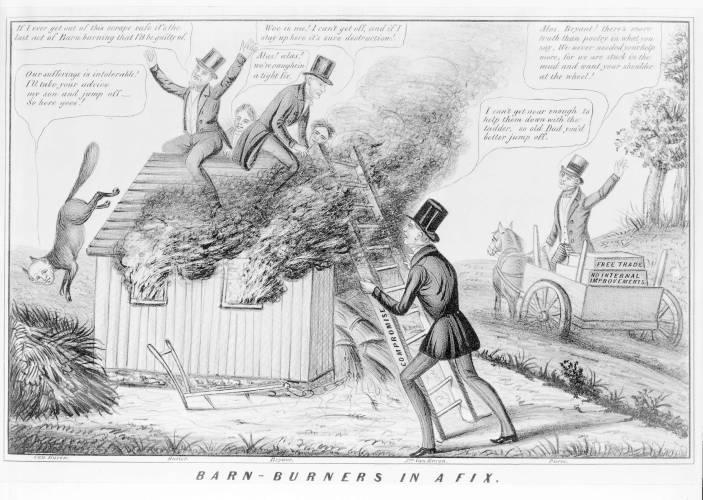
There is an old image, useful for its plainness: a farmer so desperate for one more profitable harvest that he burns his own barn, poisons his own soil, and works his own family to collapse. Not once, but season after season, making what looks like a rational choice each time — until there is nothing left. He was not attacked. He was not unlucky. He destroyed himself through the accumulated logic of short-term gain.
This image, scaled to a civilization, is what scientists, economists, philosophers, and ordinary people on every continent are now trying to describe. The term that has emerged from this effort is suicidal capitalism — and it is worth taking seriously, not as a slogan, but as a clinical description of something that is actually happening.
The “suicide” is not dramatic. It is more mundane and more frightening for being so mundane: a system that forces the people operating within it to make choices that, added up across decades and generations, undermine the natural and social foundations of human life. Very efficient. Very modern. Very stupid.
What the Scientists Are Measuring
About 75 percent of the Earth’s land surface and 66 percent of its ocean area have already been significantly altered by human activity.
The Intergovernmental Science-Policy Platform on Biodiversity and Ecosystem Services concluded in its landmark assessment that somewhere in the vicinity of one million species currently face extinction, many within decades.
The IUCN Red List — the world’s most authoritative catalogue of species status — now lists more than 48,600 species as threatened with extinction out of more than 172,600 assessed.
This is not a Hollywood style apocalypse. It is a measured biological unraveling.
The concept of planetary boundaries is useful for understanding the full scope of what is transpiring. Scientists have identified nine Earth-system processes that define the stable conditions under which human civilization developed: the climate system, biodiversity, land use, freshwater, nitrogen and phosphorus flows, ocean chemistry, ozone, aerosols, and novel entities such as synthetic chemicals and plastics. In a 2023 update, researchers at the Stockholm Resilience Centre found that six of the nine boundaries had already been transgressed. That does not mean Earth explodes tomorrow. It means we are moving outside the envelope of conditions that made agriculture, cities, trade, governments, and everything we call civilization possible.
Climate numbers tell their own story. The IPCC has concluded, unequivocally, that human activities — primarily the burning of fossil fuels — have raised global surface temperatures approximately 1.1°C above the pre-industrial average. The World Meteorological Organization found that the eleven years from 2015 to 2025 were the hottest eleven years on record. The European Union’s Copernicus Climate Change Service reported that 2023 through 2025 were the first three-year period in human history to average more than 1.5°C above pre-industrial levels. The United Nations Environment Programme’s 2025 Emissions Gap Report found that current government policies point toward roughly 2.8°C of warming this century — well into the territory of food system stress, mass migration, devastating floods, coral reef collapse, and state instability.
These are not future projections. They are measurements of the present.
Economics is the Operating System of Crisis
Modern capitalism is built on a simple engine: invest capital, produce goods or services, sell them for profit, reinvest, and grow. Growth is not merely desirable under this system — it is structurally required. A company that stops growing loses investors. A national economy that stops growing is described as being in crisis. The system is, in a precise sense, addicted to expansion.
The problem is that expansion has physical limits. The atmosphere is finite. The oceans are finite. The soil is finite. Freshwater is finite. The diversity of life that regulates climate, pollinates crops, filters water, and maintains the conditions for human survival is finite. An economic system that treats all of this as “externalities” — economists’ polite word for “somebody else’s problem” — is not managing resources. It is liquidating them.
The numbers on this are staggering. The International Monetary Fund estimated global fossil fuel subsidies at approximately $7 trillion in 2022 — including both direct government payments and the failure to price the climate and air-pollution damage those fuels cause. Even after decades of climate summits and green pledges, the global economy continues to discount the fuels that are destabilizing the planetary climate.
Meanwhile, the World Bank has warned that collapse of just a selection of ecosystem services — wild pollination, marine fisheries, and native forest timber — could reduce global GDP by $2.7 trillion annually by 2030, and that estimate is conservative because it captures only selected services and none of the spiritual, cultural, biological, or intergenerational costs of treating the living world as a liquidation sale.
The fossil fuel subsidy figure is worth pausing on. Seven trillion dollars is not a rounding error. It is larger than the entire economic output of Japan. It represents the full weight of the most powerful governments on Earth choosing, year after year, to subsidize their own destruction. That is not a market failure in the technical sense. It is a political and moral failure posing as accounting.
Technology has made this worse, not better. More precisely, technology without adequate moral restraint has amplified the destructive capacity of the growth engine.
Modern technology does three dangerous things.
First, it increases reach: we can now strip-mine mountains, trawl deep oceans, pump ancient carbon reservoirs, engineer genomes, and transport invasive species globally. The old physical limits of distance, labor, and local consequence have been removed. Second, it increases speed: artificial intelligence, automated finance, global logist
ics, satellite surveillance, synthetic biology, and algorithmic communication all compress the time between decision and consequence faster than any institution can govern. The Stanford AI Index 2025 documents rapid improvements in AI capability and a massive expansion of private investment, while the International Energy Agency estimates that data centers consumed approximately 415 terawatt-hours of electricity in 2024 — about 1.5 percent of global electricity use, growing at roughly 12 percent per year. The cloud, it turns out, lives on Earth and requires wires, water, metals, land, and power plants.
Third, technology abstracts consequence: the more mediated life becomes, the easier it is to experience destruction as a number — yield, return, quarterly growth, engagement, productivity, GDP. A forest becomes timber value. A reef becomes tourism value. A person becomes labor value. A culture becomes content. The living world is translated into spreadsheets, and then people are shocked to find the spreadsheet has no soul.
The Human Cost Inside the Machine
The damage is not only ecological. It is social and psychological, and it reaches into the most private corners of our lives.
The French sociologist Émile Durkheim, writing in the late 19th century, found that suicide was not simply a personal tragedy but a social symptom. When societies lost their sense of shared purpose and belonging, when individuals felt isolated and expendable, death rates rose. He called one specific type anomic suicide: the kind that follows from the disorientation of a society in which norms have collapsed, ambitions are unlimited, and nothing feels stable or meaningful.
More than a century later, economists Anne Case and Angus Deaton documented a 21st-century version of the same phenomenon in the United States. They called them “deaths of despair” — deaths from suicide, drug overdose, and alcoholism rising sharply among working-class Americans without college degrees. These were people who felt, correctly, that the economy had discarded them. The factories had moved overseas. The wages had stagnated. The communities had hollowed out. The opioid epidemic — manufactured in part by pharmaceutical companies seeking profit and enabled by a regulatory system that prioritized industry interests over public health — killed hundreds of thousands of them.
The system had promised unlimited opportunity. It delivered, for most, increasing precarity and a pervasive sense of being used and then thrown away.
This is what “suicidal capitalism” means in its human register: not just dying ecosystems, but dying communities; not just the extinction of species, but the extinction of meaning; not just a warming planet, but a society that generates, systematically, the conditions for individual despair.
A World in Disagreement — Six Perspectives
The crisis is global, but the responses are not uniform. Different parts of the world, shaped by different histories, values, and experiences, have arrived at very different diagnoses and very different visions of what a better arrangement might look like.
The United States built the most powerful capitalist economy in human history and, for much of the 20th century, genuinely believed that capitalism and freedom were essentially the same thing. For several decades that belief had some basis in reality: wages rose, the middle class expanded, homeownership became accessible, and the material standard of living improved for many. But since the 1970s, wages for working people have stagnated even as the overall economy has grown enormously, because nearly all of the gains have flowed to those already at the top. The United States now has levels of economic inequality comparable to countries Americans were once taught to pity. Tens of millions lack reliable health care. The American corporate sector spent decades and enormous resources funding deliberate campaigns to confuse the public about the science of climate change, in order to protect fossil fuel profits. Meanwhile, the United States remains the world’s largest historical emitter of greenhouse gases, and its consumer culture — built on cheap fossil fuels, planned obsolescence, and the continuous manufacturing of desire — has been the primary driver of planetary ecological overshoot for two generations.
American critics across the political spectrum have begun to name this clearly. The left argues that the system’s fundamental incentive structure is incompatible with ecological survival or social justice — that tweaking it will not be enough. Indigenous American voices add that the problem is older than industrial capitalism: five centuries of treating land, water, and living systems as property to be extracted rather than relatives to be respected. What reformers propose ranges widely, from a Green New Deal investing in clean energy and jobs, to worker ownership of firms, shorter working weeks, universal public services, and — most seriously — a fundamental rethinking of what an economy is for.
Europe built a softer version of capitalism: stronger labor protections, universal health care, more robust environmental regulation, and a social democratic tradition that insisted the market must serve society rather than the reverse. Scandinavian countries in particular achieved high levels of equality and social wellbeing while maintaining market economies. For decades this was held up, including by Europeans themselves, as proof that capitalism could be made humane.
But the 2008 financial crisis exposed the fragility of that arrangement. Austerity measures imposed in its aftermath dismantled social protections across Greece, Spain, Portugal, and elsewhere — revealing that when financial markets demanded their pound of flesh, humane capitalism tended to step aside. Far-right movements have risen across the continent, fed by the anger of people who feel abandoned by globalization and by the educated classes who managed it. And even Europe’s most admired climate policies remain woefully insufficient: emissions continue rising globally, and the EU’s collective ecological footprint remains far beyond what the planet can sustain. A growing body of European thinkers — particularly degrowth theorists in France, Germany, and Spain — now argue that “green capitalism,” the idea that the economy can keep growing if it simply switches to cleaner energy, is a dangerous illusion. The size of the economy itself, they argue, must shrink in wealthy countries, while life becomes richer in those things that markets cannot capture: care, community, time, beauty, rest.
Russia’s relationship with capitalism is defined by trauma. The Soviet Union offered a 20th-century alternative — a state-planned economy that promised equality and industrial development, but delivered authoritarianism, environmental catastrophe, and eventual collapse. When the Soviet system fell in 1991, Russia’s rapid transition to capitalism became one of the great economic disasters of the modern era: a small group of insiders, in a process of looting masquerading as privatization, seized the wealth of an entire nation virtually overnight. The oligarchs were born. Poverty and life expectancy collapsed simultaneously.
Today Russia operates as a petro-state — structurally dependent on extracting and exporting oil and gas, giving its government powerful incentives to resist any global transition away from fossil fuels. The government’s official ideology critiques Western liberal capitalism not from the left but from a conservative and authoritarian standpoint, arguing that Western materialism and individualism have destroyed traditional values, family structures, and community bonds. There is something real in that observation — consumer capitalism does corrode traditional community — even if the regime making the argument is itself deeply corrupt and serves primarily to concentrate wealth at the top while using nationalism to distract from that concentration. What Russia offers as an alternative is not ecological sustainability or greater equality. It is authoritarianism with resource extraction wearing a mask of civilizational grievance.
China presents the most significant and complex case. Over forty years, China lifted hundreds of millions of people out of extreme poverty through a model combining market mechanisms with strong state direction. This is a genuine achievement of enormous historical importance, and any honest accounting of capitalism’s alternatives must reckon with it. But the ecological cost has been catastrophic. China is now the world’s largest emitter of greenhouse gases. Rapid industrialization produced devastating air and water pollution, mass species extinction, and the desertification of significant portions of the country’s territory. China’s Belt and Road Initiative, funding infrastructure projects across Asia, Africa, and Latin America, has in many cases exported extractive and polluting industries to countries with weaker environmental protections.
The Chinese government has also made very significant investments in renewable energy — it is the world’s largest producer of solar panels and electric vehicles — but critics argue that this “green development” remains embedded in a growth logic that cannot solve the underlying problem: the goal is to keep growing, only the fuel changes. Chinese intellectual traditions contain genuine alternatives that official policy mostly ignores. Daoist philosophy, with its emphasis on living in harmony with natural rhythms rather than dominating or engineering nature, represents a profoundly different orientation toward the living world. Confucian ethics, with its emphasis on collective responsibility and intergenerational duty, offers a very different framework for thinking about what an economy owes to the future. These are not relics. They are resources that a civilization on a different trajectory might actually draw upon.
The Islamic world encompasses enormous diversity — from Indonesia to Morocco, from Turkey to Iran — but Islamic economic thought offers a coherent and underappreciated critique of capitalist logic that deserves serious attention outside Muslim communities.
Central to Islamic economics is the prohibition of riba, usually translated as usury or interest. This is not merely a technical banking regulation. It reflects a deep moral conviction that money should not generate more money simply by sitting still — that wealth must be connected to genuine productive activity and must not exploit those who are desperate enough to borrow. Modern finance capitalism is built almost entirely on interest-bearing debt, which systematically and structurally transfers wealth from the poor and indebted to the wealthy and creditor. Islamic economic thought also insists on zakat — obligatory charitable giving — and the concept of maslaha, the common good, which places hard limits on private accumulation when it damages the community. The Quran repeatedly and explicitly warns against the hoarding of wealth and the exploitation of workers and the vulnerable.
In practice, many Muslim-majority states are deeply embedded in global capitalism and suffer its inequalities as acutely as anywhere else — the Gulf states built spectacular wealth on fossil fuel extraction, which is one of the most direct expressions of suicidal capitalism available, and Iran’s clerical government critiques Western capitalism in rhetoric while practicing crony capitalism internally. But the intellectual and moral tradition — an economics of justice, of limits, of obligation to future generations — is serious, sophisticated, and largely absent from global policy conversations.
Africa and Latin America share a history that makes the conversation about capitalism’s failures impossible to have honestly without confronting colonialism. For five centuries, both regions were structured to serve external accumulation — their land, labor, resources, and people extracted for the enrichment of Europe and, later, North America. Colonial capitalism did not bring development to these regions; it reorganized existing societies and economies to produce wealth for somewhere else, destroying systems of governance, land management, and trade that had sustained communities for generations.
This history continues into the present in a particularly cruel form: Africa contributes the least to global greenhouse gas emissions of any inhabited continent, yet its peoples are among the most severely affected by climate change — through drought, desertification, flooding, food insecurity, and the destruction of communities that have lived sustainably on their land for generations. African countries and communities are, in a precise sense, paying with their lives for a crisis they did not create and from which the wealthy nations that did create it continue to profit.
African intellectual traditions offer genuine alternatives. The philosophy of Ubuntu — often rendered as “I am because we are” — holds that human identity and flourishing are constituted through relationship, community, and mutual care, not through competitive self-accumulation. An economics built on Ubuntu logic would look fundamentally different from what currently governs the world. Pan-Africanist thinkers from Kwame Nkrumah to Frantz Fanon argued that genuine development requires breaking free from extractive structures, not simply securing a larger share of them.
Latin America has produced some of the world’s most creative and institutionally serious alternatives. Buen Vivir — or Sumak Kawsay in Quechua — emerging from Indigenous Andean communities and incorporated into the constitutions of Ecuador and Bolivia, offers a vision of the good life that refuses the terms of capitalist growth entirely. Rather than measuring progress by GDP or individual income, Buen Vivir asks: are people living well in community with each other and in harmony with the natural world? Are future generations being considered? Are the rights of Pachamama — Mother Earth — being respected?
Ecuador’s 2008 constitution went further still: it legally recognized nature itself as having rights. In the Western legal tradition, nature is property — something owned and used. In the Buen Vivir tradition, nature is a subject with standing, a living community of which humans are a part rather than its masters.
What Could Actually Work Better?
Looking across these perspectives, several families of genuine alternatives emerge.
Ecosocialism argues for democratic collective ownership of economic life, guided by the needs of people and planet rather than profit. It combines the socialist insistence on collective governance with a rigorous ecological commitment that earlier forms of socialism — including the Soviet model — catastrophically lacked. It argues that neither the market nor authoritarian state planning can navigate the ecological crisis — only genuine democratic control over production and consumption, transparent and accountable to those who bear the consequences, can.
Degrowth challenges the most basic premise of nearly every existing economic ideology — that more is better. It argues that wealthy economies must deliberately reduce their material throughput: produce and consume less, redistribute what exists far more fairly, shorten working hours, and expand the dimensions of life that markets can neither capture nor replace — care, community, creativity, rest, and the unquantifiable pleasure of a living world that is allowed to regenerate. This is not primitivism. It is the recognition that beyond a certain level of material consumption, additional growth does not improve human wellbeing — and beyond a certain level of ecological stress, it actively destroys it.
The commons represents a way of organizing shared resources — land, water, knowledge, seeds, digital infrastructure, genetic information — that is neither private property nor state ownership, but collective democratic stewardship governed by those who depend on it. The late Nobel laureate Elinor Ostrom demonstrated through decades of research that communities can and do govern shared resources sustainably when given the autonomy, institutional support, and long time horizons to do so. Commons-based thinking draws on centuries of Indigenous practice and a growing body of contemporary scholarship.
Pluriversal alternatives — Buen Vivir, Ubuntu, Islamic economics, Hawaiian mālama ʻāina and the concept of ea, Indigenous traditions from every inhabited continent — insist on something that the Western development tradition has great difficulty accepting: there is no single universal solution, because the premise of a single universal problem imposed from one cultural center is itself part of what went wrong.
Different communities, rooted in different histories, ecologies, languages, and relationships with the living world, need the freedom and the power to build different relationships with the land and with each other.
In Hawaiʻi, the concept of aloha ʻāina — love and duty toward land — does not solve everything by magic. No cultural tradition gets to skip politics, power, or conflict. But it begins from a saner premise than market theology: land is not inert property. It is ancestor, provider, law, memory, and obligation. That is not romanticism. It is better systems thinking than the economic orthodoxy currently steering the global bus toward the cliff while selling naming rights to the guardrail.
Continued in PART THREE.

Leave a Reply