On privilege, prayer, and what is worth counting
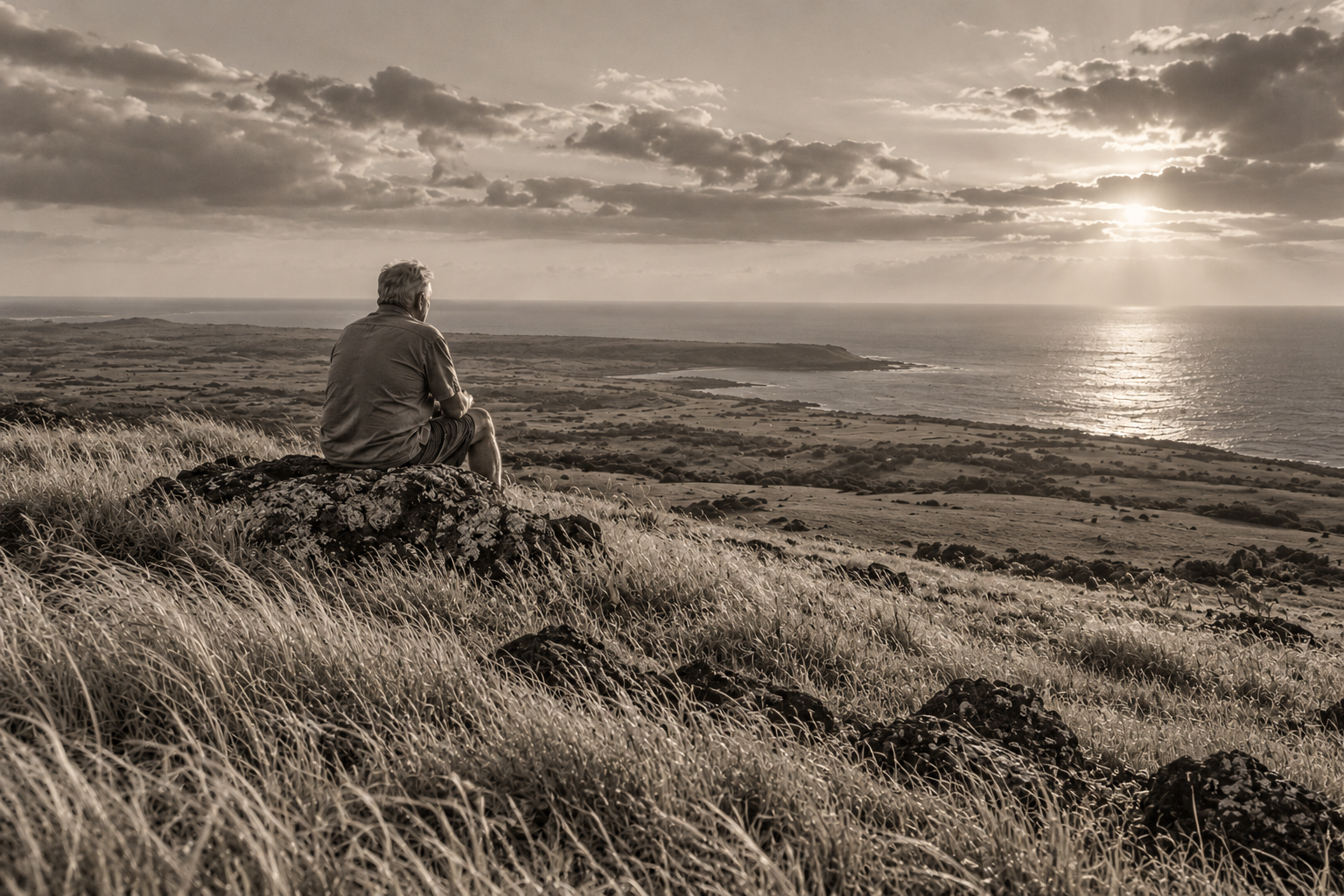
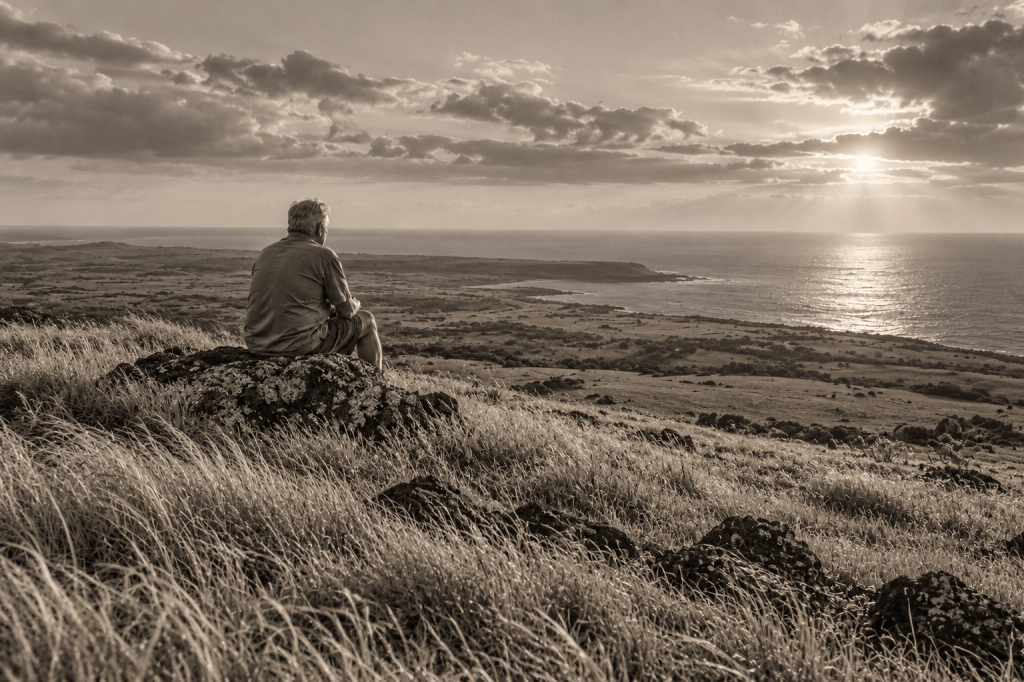
I am fortunate. I have somehow been granted the privilege to live in more peace and solitude than most people other than monks and nuns. Itʻs not for everybody, but it works for me. It gives me time to think.
With that privilege comes responsibility to use the time and perspective to examine what is important in life, and to propose what we can do to make it better for all of us, including the least of us: those who are suffering, and those who are forced to live in fear and deprivation.
Most of what I write on this blog is diagnosis. Those essays deal in numbers: test scores, turnout, bailout costs, electric bills. This one is about the premise under the numbers, the reason they matter at all.
What we count
The wealth of this world cannot be measured in dollars. Money can buy a view of the ocean; it cannot enjoy one. It can pay for care; it cannot feel compassion. It cannot love or be loved. It can buy quiet, but not peace.
The endless world of capital does not compare to the finite world of living beings. Capital has no natural limit. It must grow or it fails, and it measures everything by whether it can be made to grow.
Living beings are finite. A reef, a forest, a child, an old man in a small town at the north end of an island: each is born, flourishes for a while, and ends. Each has a limit, and each is irreplaceable. An economy that treats the finite as raw material for the endless will consume it, and will call the consumption growth.
That is the premise beneath every figure I cite. A twelfth grader who cannot follow a complex argument is not a data point, she is a life with fewer open doors. A family that cuts back on food to keep the lights on is not an affordability metric. When I argue that public statistics should not be dismantled, I am arguing that a society should not stop looking at its people. Numbers are how a large public pays attention. They are worth defending only because what they count is worth more than they are.
The role of god
For some people god is the whole of reality; for others, a presence glimpsed in a few moments of a life; for others, nothing at all. Each of them is describing something true about their own experience. There is only as much god as you believe there is, and only for you.
Whether you believe in a god or not, you can take advantage of any god, or none, to help manage suffering of all kinds, through prayer.
Prayer is a meditation, and meditation is a prayer. The words differ, the postures differ, the names differ. The act is the same: deliberately turning the mind toward something larger than its own wanting, and holding it there.
All prayers work to alleviate suffering. I do not mean that prayer bends the world to our wishes. The rain does not come because we ask for it, and an eviction notice is not withdrawn because we pray over it. I mean that prayer works on the one who prays. It steadies attention. It loosens the grip of fear enough to see the next step. It turns the mind, even briefly, from itself toward others. That is not a small thing. It is what every contemplative tradition I know has claimed, and it is something anyone can test in their own life without taking anyone’s word for it.
You can create your own prayers. They do not need a church, a teacher, or a creed, though they can help. Prayers work while you use them, and only when you use them. A prayer that is never said is like a shovel that never touches dirt.
Why this belongs on a political blog
The practices that make suffering bearable are the same practices that keep the finite world in view when capital insists on its endless pursuits.
Fear narrows attention. A frightened person sees threats and enemies and very little else, which is why fear is so useful to people who want to be followed rather than checked. Outrage feels like the opposite of fear, but it works the same way; it holds attention without directing it, and leaves the problem exactly where it was.
A person who can sit with his own suffering without panic can look at someone else’s without turning away. He can read a budget, question a claim, and stay in a long fight without burning out or giving up. That steadiness is not a retreat from politics. It is a precondition for a politics that serves the least of us rather than the loudest.
Privilege and duty
Not everyone has solitude. A mother working two jobs does not have an hour of quiet in the morning, and it would be obscene to tell her that meditation is the answer to her rent. Prayer is no substitute for wages, housing, health care, or schools. Anyone who offers it that way is selling something.
That is exactly why the responsibility falls more heavily on those of us who do have the time. The duty is double. First, to do the inner work, because a person who has not faced his own fear will spread it. Second, to put what that work yields—clarity, patience, and the ability to see what is actually there—at the service of those who have no time to spare.
The wealth of this world is finite and alive. It is in the people next to us, the land under us, and the hours we are given. It cannot be stored or compounded. It can only be noticed, cared for, and shared. That is worth more than anything the endless world can offer, and it is worth defending.


Leave a Reply