
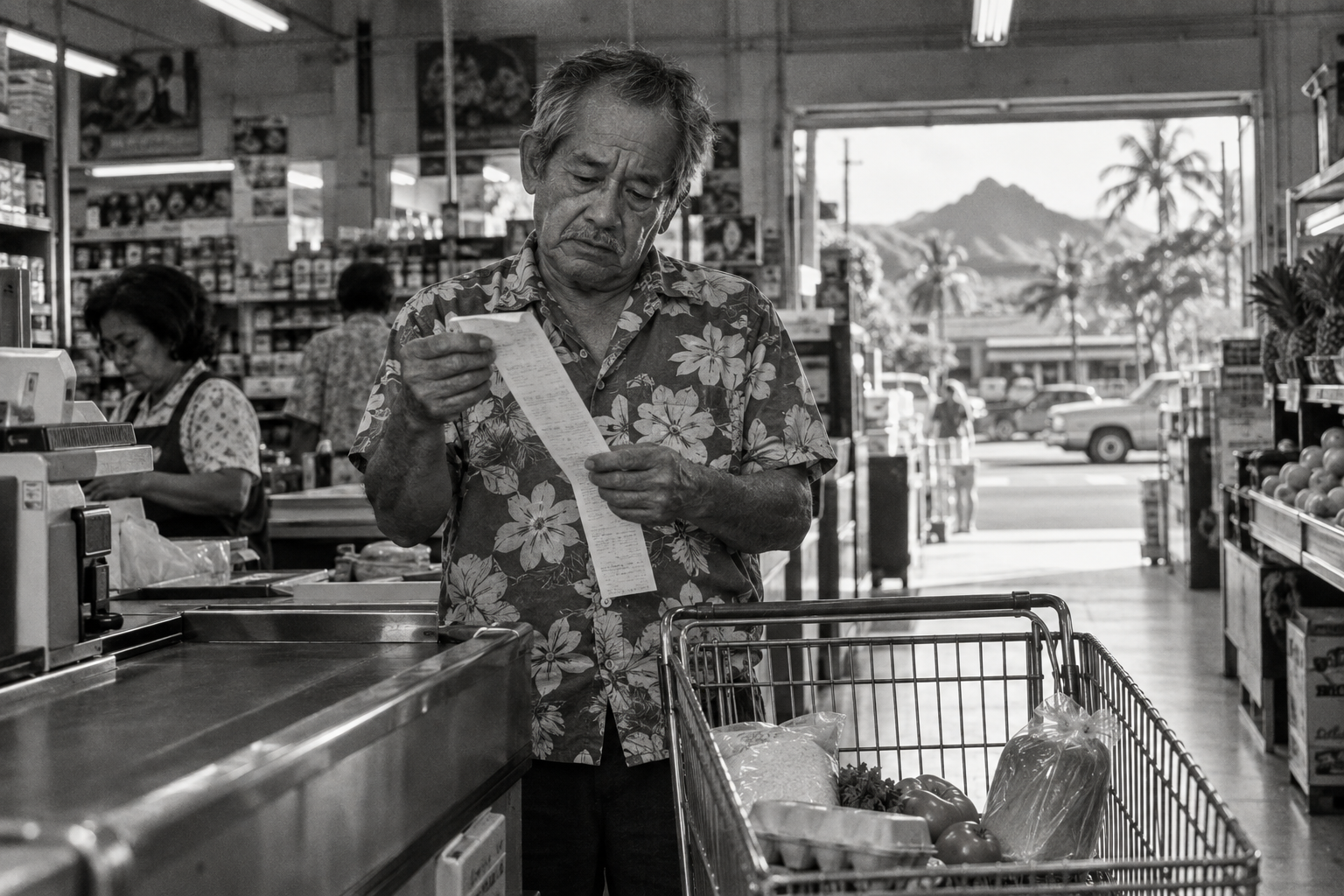
I’m not. I went to the grocery store.
I’ve been thinking about the two parties, and about how much of what passes for politics now is just noise.
The Republicans I grew up with disagreed with Democrats about plenty, but they shared enough common ground that the two sides could actually get something done. That’s what people used to mean by bipartisanship. It wasn’t friendship. It was a working overlap. They built roads, schools, and hospitals.
What we have now is different in kind. MAGA isn’t really a political party. It’s a movement built on feeling, and the feeling it runs on is grievance. People have been taught to hate and to fight, and hate and fighting are renewable. They never run out.
But anger is the point. Somebody is farming it. And monetizing it. And when I join in, I’m not fighting the thing — I’m feeding it.
Because while all of us are screaming at each other, the money keeps moving in exactly the same direction it always has.
Look at the last two administrations. Under one, public money went to green corporations. Under this one, it goes to coal and oil. Both times, the public carried the risk and private owners kept the return. The recipient changed. The arrangement didn’t.
That’s the part nobody wants to talk about, and it’s the only part that matters.
Here’s a small example that stuck with me. All this artificial intelligence money sloshing around right now: that research was paid for by the Pentagon. The military funded the first AI labs back in the 1960s. It funded the work that became self-driving cars. It funded the speech research that turned into Siri. And it never stopped.
In 2018, years into the commercial boom, the Defense Department committed another two billion dollars to it.
Nobody voted for any of that. It just happened, quietly, with our money, and now a handful of companies own the result.
Same principle. Different corporations.
So what do we do?
I don’t think the answer is a better slogan. But there’s one question that works on everybody I know, regardless of who they voted for, and it comes out of the value most of us actually share: ʻohana.
What is the government doing with our taxes for your ʻohana?
That question works at any family table. It doesn’t ask anybody to switch teams. It just asks for an answer. And right now, in most of this state, there isn’t a good one.
Now here’s the part I really to pursue.
County mayors in Hawaiʻi are nonpartisan. There’s no party label on the ballot, no party machinery to capture, no national brand to attack or defend. And the mayor has real power: permitting, land use, roads, water, housing, police budgets. What gets built and what doesn’t.
That’s a lot of power sitting in a place where the divide-and-conquer play doesn’t work. You can’t run that game in a race with no party labels. What you can do is ask people what the government is doing for their family.
Meanwhile, most of what happens at the Legislature gets settled before the public is in the room: in committee referrals, in the last hours of conference, where bills that passed both chambers are allowed to quietly die. County executives don’t work that way. That’s our opening.
But I don’t want to pretend the hard part isn’t hard.
I said we need mayors who aren’t beholden to the corporations or the unions. The corporations part is easy to say. The unions part is where this gets real.
The building trades often decide elections in this state. In this year’s primary, the carpenters’ union and its contractor partners put nearly five million dollars through a single committee: more than two million of it behind one candidate for lieutenant governor, running against somebody who’d refused corporate PAC money. That’s not a scandal. It’s just how things work here, out in the open.
So how does anyone win a mayor’s race without the building trades?
Not by running against working people. Union members need work, and anybody serious about changing land use here owes them a straight answer about what else pays. There are answers. There will always be housing, hospitals, schools, and water systems to build — and to rebuild after the next disaster.
The real question is whether construction gets organized around resorts and luxury condos nobody local can afford, or around what our own families actually need. That’s a conversation with labor, not against it.
A couple of other things help. The new law stripping corporations of the power to spend in Hawaiʻi elections takes effect in 2027 — first in the nation, and it’s going to get sued, and it will need people defending it. And full public financing of campaigns, which the Senate keeps passing unanimously while the House won’t even give it a hearing, would do more than any single candidate to make an independent campaign possible.
Without those things, we already know what we’re going to get. More corporate-owned hospitality. More luxury housing. More data centers and satellite launch proposals arriving pre-negotiated, with the deal done before anyone local hears about it.
So here’s where I’ve landed.
Stop asking people who they’re for or against. Ask them what the government is doing with their money for their ʻohana.
Letʻs find candidates who share these values and run them for mayors.
Who do you suggest?
Please subscribe and share. This is a no-profit enterprise. You can support this effort at www.hawicenter.com/payments and through CashApp $richardbodien.

Leave a Reply