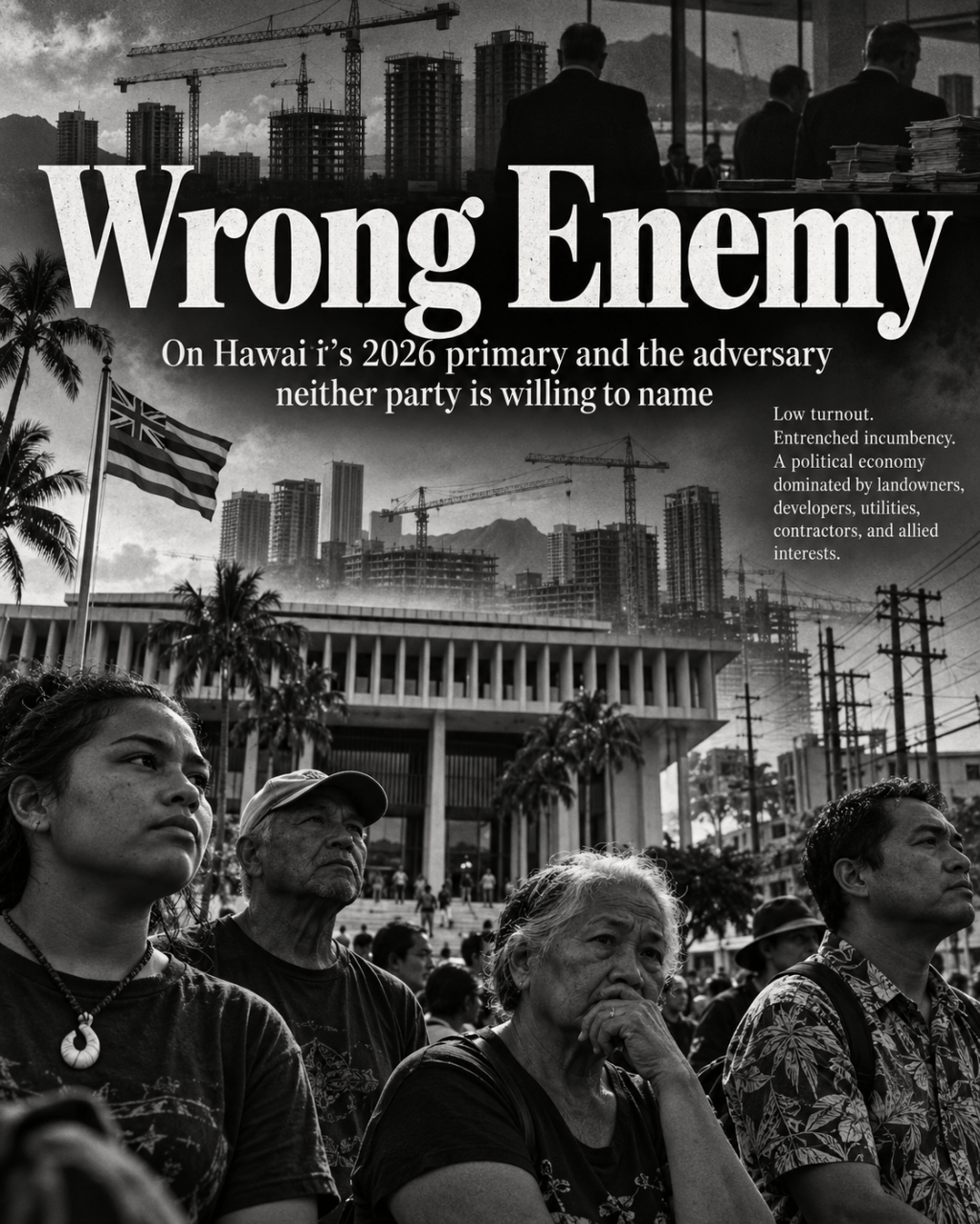
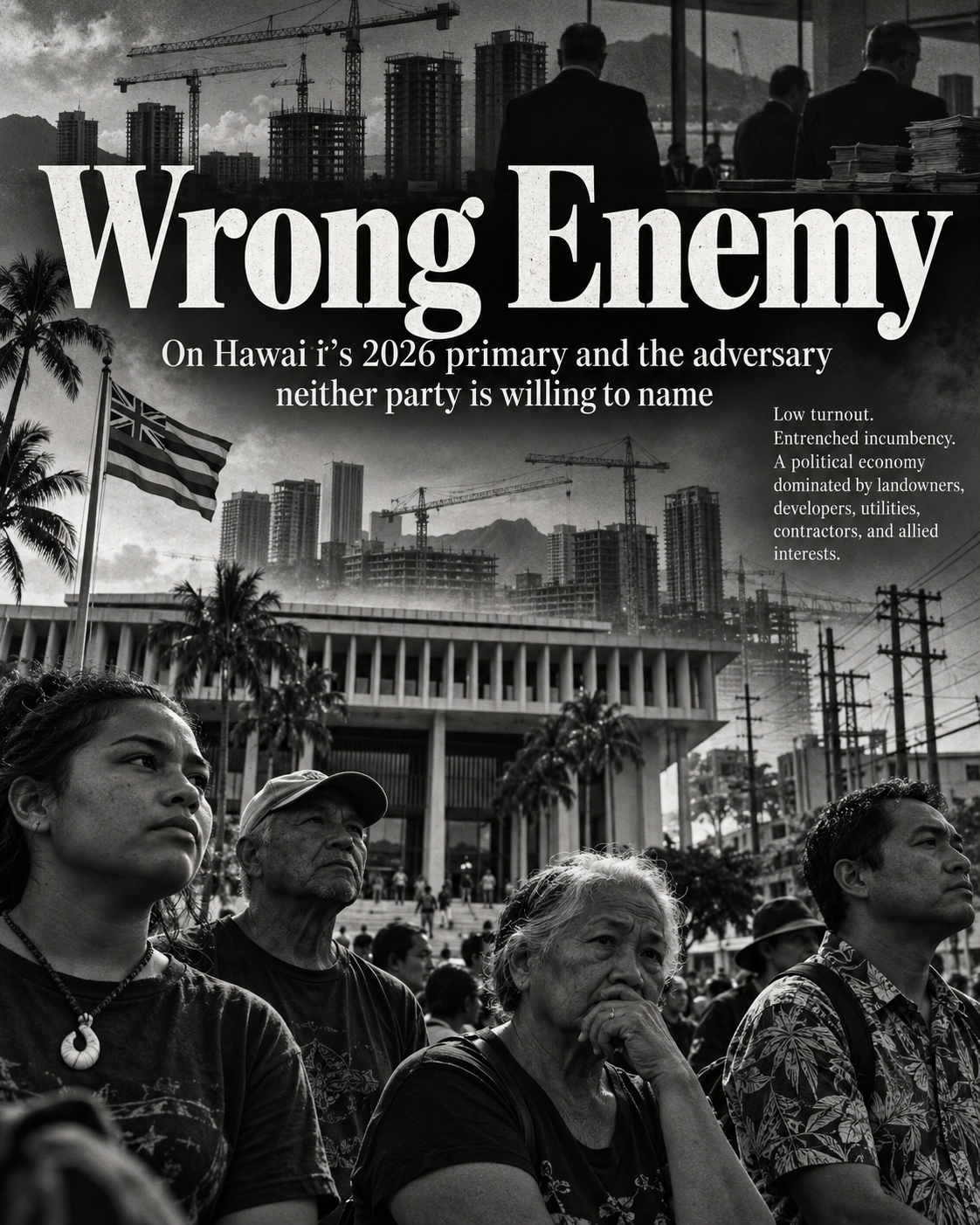
On Hawaiʻi’s 2026 primary and the adversary neither party is willing to name
Summary
In 1897, Native Hawaiians signed petitions against annexation in overwhelming numbers. In the August 8, 2026 primary, only a third of Hawaiʻi’s registered voters returned a ballot: 281,214 of 846,543, or 33.2 percent, the second-lowest turnout since statehood. The essay argues that participation fell because the political arrangement changed, not because people became less capable of taking part.
The usual blames on mail ballots, the elections office, a rigged system, illegal voters, et al., just don’t hold up. Primary turnout was above sixty percent for most of the years before 1995. Since 2000, the number of people who actually vote in a primary has stayed between about 246,000 and 293,000, while the voter rolls have grown by a third.
The result is a stable arrangement rather than a sudden collapse. A small electorate of party regulars and organized interests returns incumbents, and incumbency discourages challengers. Neither Republicans nor progressive challengers were cheated. Neither gave enough people a reason to vote.
The deeper reason for this stagnancy is that both parties’ establishment politicians practice “corporate socialism”: the public carries the risk and concentrated wealth keeps the profit. Hawaiʻi’s latest example is the 2025 law that capped utility wildfire liability and had customers finance 50% of the work.
The people who govern are the managers of a “growth coalition”: landowners, developers, utilities, contractors, and the unions that depend on continuous building. In this primary the carpenters’ union and its contractor partners spent nearly $5 million through a single committee. The coalition works largely in the open, but the important decisions are made in committee rooms, where reform bills die without explanation.
Real remedies need to be actively pursued in the coming sessions:
- Public campaign financing.
Hawaiʻi Island made progress and let it lapse. - Real party two-party competition, and more parties.
One party faces no real competition and the other has no real program. - Ranked-choice voting.
This makes more room for new parties and new policies.
The enemy is not the neighbor across the aisle but a political economy that keeps people arguing about labels while money sets the terms.
Read the long form article with sources at www.bodien.com/downloads.
Please subscribe and share.
This is a no-profit enterprise.
You can support this effort at
http://www.hawicenter.com/payments
and at CashApp $richardbodien.


Leave a Reply