What Was Lost, What Was Funded, What Was Spent, What Was Built, and What Remains
As Kaʻū, Nāʻalehu, Puna, and the surrounding communities begin rebuilding after Lala, there is a case worth studying that is closer to home than Lahaina and further along: the 2018 Kīlauea eruption, now eight years behind us. The pattern it set is the one to watch for. Much was promised. Much was allocated. Comparatively little was built.
Part of the reason is structural. Hawaiʻi, like the United States, does not have a free market. It has something nearer to corporate socialism, in which an entrenched class of executives, lobbyists, contractors, subcontractors, developers, consultants, designers, engineers, administrators, program managers, and everyone else who never picks up a hammer, feeds from a trough we fill with taxes, fees, and surcharges. What eventually trickles down to the people is inevitably too little, too little.
You do not have to accept my diagnosis to accept what follows. The numbers tell the story by themselves. The point is, it doesnʻt have to be this way. But nothing will change if people donʻt demand change.
Recent primary elections donʻt provide me with much hope of that. I hope the people of Puna will find some new representation and vote for change.
Eight years after lava poured from Leilani Estates, the recovery of Lower Puna is substantial in some areas, unfinished in others, and — in at least one case — has outright failed.
The most important accounting point to make clear applies to all disaster recovery:
- appropriated is not spent
- awarded is not spent
- contracted is not spent
- spent does not necessarily mean built
Puna’s record becomes far easier to understand once those categories are recognized, and it becomes harder to defend once they are.
What happened
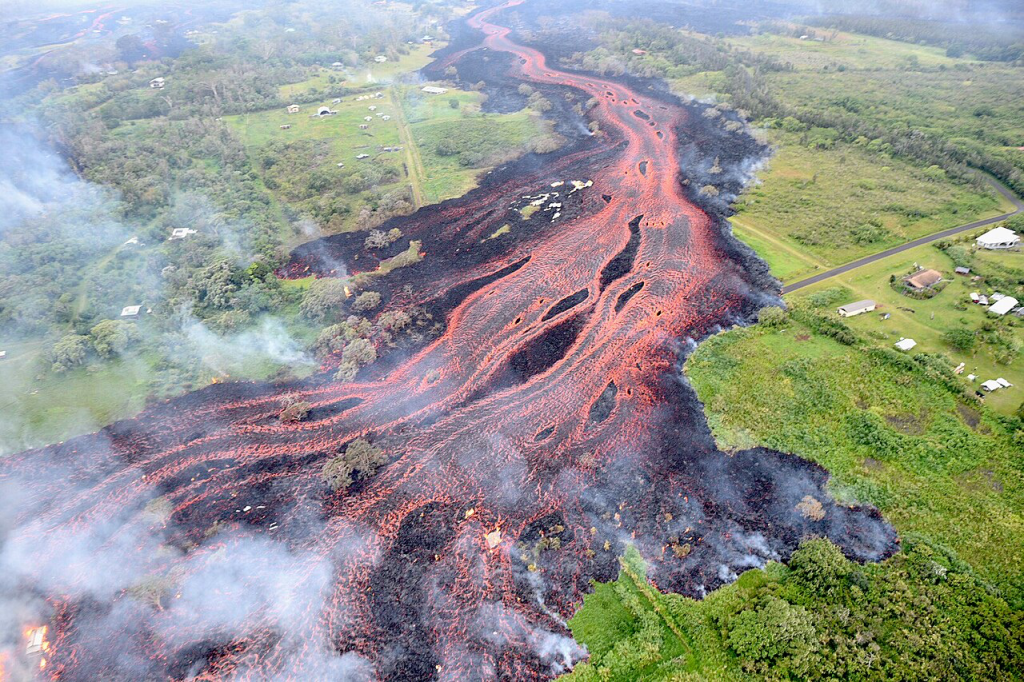
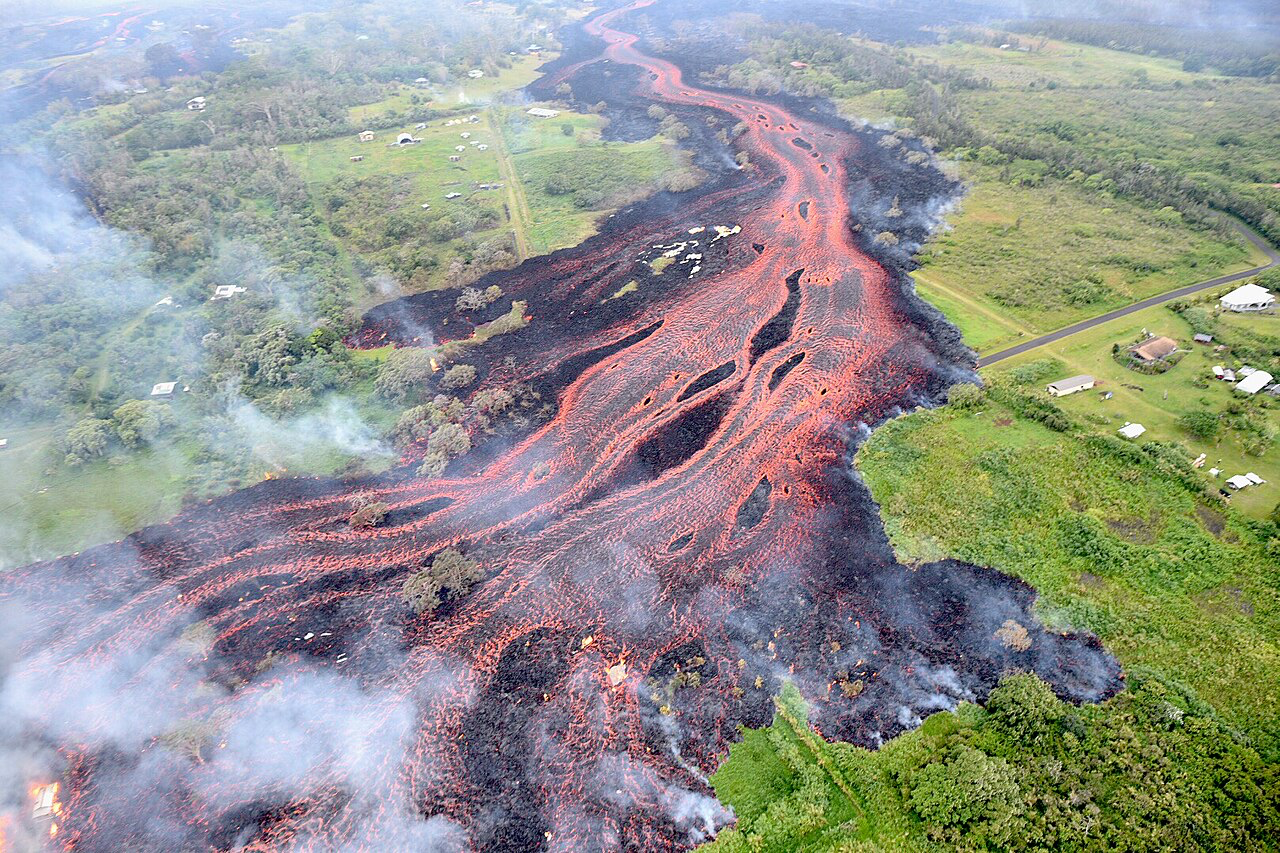
The eruption began on May 3, 2018, when magma moved down Kīlauea’s Lower East Rift Zone and the first fissure opened in Leilani Estates, the first of twenty-four. Fissure 8 became the dominant vent and fed a channelized flow to the ocean.
Roughly one cubic kilometer of lava erupted through August — about two-thirds from Fissure 8 — accompanied by roughly 60,000 earthquakes. Repeated collapses at the summit deepened Halemaʻumaʻu Crater. It was the largest Lower East Rift Zone eruption and caldera collapse in at least 200 years.[1]
These are the physical losses, as documented by the County:
| Impact | Documented loss |
|---|---|
| Land inundated | 8,488 acres / 13.7 sq. mi. |
| New shoreline land created | 875 acres |
| Forest reserve destroyed | 500 acres |
| Anchialine pools inundated | 80 |
| Total parcels impacted | 1,770 |
| Parcels inundated | 1,579 (incl. 808 vacant, 39 agricultural) |
| Residences destroyed | 612 (294 of them primary residences) |
| Other structures destroyed | 111 |
| Homes remaining in isolation | 19 |
| Residents initially displaced | ~3,000 |
| Estimated home losses | $296 million |
| Roads inundated | 32.3 miles public + private |
| Public roads inundated | nearly 13 miles |
| Waterlines destroyed | 14.5 miles |
| Utility poles destroyed | 900 |
| Estimated public-infrastructure damage | $236.5 million |
| Estimated farm losses | $27.9 million |
| Estimated island-wide lost revenue | $415 million |
| Estimated jobs lost | 2,950 |
Entire communities — Kapoho Vacationland, Kapoho Beach Lots, Lanipuna Gardens — were destroyed or heavily damaged. Kapoho Bay and the Waiʻōpae tidepools disappeared. Ahalanui Warm Ponds and Ahalanui Beach Park were lost. Kua O Ka Lā Public Charter School was destroyed. Two geothermal wells were inundated; a third was isolated, along with an electrical substation and a water well.[2]
Why there is no single number
There is no honest single figure for “money spent on Puna.” State recovery money serves as the local match for FEMA grants. State recovery funds also finance the community grant program. FEMA obligates funds but reimburses only after the County incurs eligible costs.
The streams can, however, be separated by stage:
| Program / source | Stage | Amount | What can presently be said |
|---|---|---|---|
| State of Hawaiʻi, Act 9 (2019) | Appropriated | $60 million | $20m grant + $40m loan to leverage federal recovery funds |
| FEMA — roads | Federal share | $61.5 million | 75% of an $82m road damage agreement (March 2020) |
| State loan — roads match | Authorized | $20.5 million | The 25% local match, financed by State loan |
| FEMA — water | Federal share | $30 million | 75% of ~$40m assessed water damage |
| State loan — water match | Authorized | $10 million | 25% local match |
| FEMA — parks | Federal share | $3.6 million | Ahalanui and Isaac Hale losses |
| State loan — parks match | Authorized | $1.3 million | 25% local match |
| FHWA — Highway 132 | Project funding | $5.75m–$6.5m | Road completed 2019; County and DPW figures differ |
| HUD CDBG-DR | Awarded | $107.561 million | Two grants; housing buyout and relocation |
| HUD CDBG-DR | Actually expended | $87.93 million | Through July 29, 2026 |
| Hwy. 137-A + Pohoiki Rd. / waterlines | Contract value | ~$50 million | Under construction; inside the FEMA/State envelope above |
| DLNR — Pohoiki dredging | Contract | $9.28 million | Completed October 2025 but failed. |
| Kīlauea Recovery Grants, Round 1 | Awarded | ~$3.7 million | Community projects, State recovery funds |
| Kīlauea Recovery Grants, Round 2 | Awarded | $3,293,400 | 16 projects |
| Kīlauea Recovery Grants, Round 3 | Awarded March 2026 | ~$5.98 million | New nonprofit/community awards |
| Puna Strong grants | Awarded | $380,000 | 26 nonprofits and partnerships |
| EDA — Puna wastewater | Awarded | $2.25 million | Planning/evaluation, not construction |
| EDA — Economic Recovery Plan | Awarded | $250,000 | Planning |
| USDA rural placemaking | Awarded | $225,000 | Community development |
| FEMA disaster case management | Expended | $835,088 | 109 households; program closed February 2021 |
The County’s own summary is that Hawaiʻi County “could receive nearly $300 million” in State and federal support — a conditional figure, and one the County itself flags as partly pending.[3]
Two structural features deserve emphasis.
- First, what is often described as the County’s “match” is in fact State loan money, not a State grant: Act 9’s $40 million was authorized as a loan against expected federal recovery funds.[4]
- Second, the FEMA infrastructure money flows through the Stafford Act §428 alternative procedures, which permit funds to be applied to alternative infrastructure projects rather than strict like-for-like replacement.[5]
That flexibility is the legal basis for most of the substitutions described below — and it is precisely why a public ledger is required. Under §428, “the money was spent on water infrastructure” and “the destroyed water system was rebuilt” are not the same claim.
What has actually been finished
Highway 132.
About 3.1 miles of the highway had been covered — a 1.6-mile upper section and a 1.5-mile lower section, with an isolated kīpuka between them. Reconstruction began June 10, 2019, was slowed by lava rock still exceeding 800°F that damaged equipment, and the road reopened at noon on November 27, 2019. Initial construction estimates ran to $12 million; in-house design and County-managed construction inspection brought the cost down to approximately $6.5 million, the amount FHWA obligated for reimbursement.[6] The County’s own recovery pages give the Highway 132 figure as $5.75 million, while the Department of Public Works release at the time of opening and FHWA’s own account give $6.5 million.[7] That the County has published two different numbers for its single completed road project, and reconciled neither, is the point.
What is under construction
Highway 137-A.
From the Highway 132 “Four Corners” intersection to Pohoiki Road, is a 3.6-mile reconstruction including a new 6-inch waterline. Isemoto Contracting received notice to proceed on June 24, 2024; on-site work began January 9, 2025. As of the County’s December 2025 update, rough grading was complete and waterline installation underway.[8]
Pohoiki Road.
Awarded to Nan, Inc. in January 2025, but the notice to proceed did not issue until August 2025; the contractor began staging on August 25. The project rebuilds and realigns 4.5 miles of Upper and Lower Pohoiki Road, includes roughly 1,000 feet of Leilani Avenue, and restores the waterline to Isaac Kepoʻokalani Hale Beach Park.[9]
The published schedules have moved, repeatedly, and the County’s website still carries the superseded ones alongside the current ones:
| Project | Earlier published target | Current authoritative target |
|---|---|---|
| Highway 137-A | March 2026 (Aug. 2024 update) | Q3 2026 (Dec. 2025 update) |
| Pohoiki Road | Q4 2026 (Jan. 2025 update) | Q2 2027 (Aug. 2025 release) |
A resident consulting the County’s roads page today will find the January 2025 update stating Q4 2026 for Pohoiki Road, and the August 2025 press release stating Q2 2027. Nothing on the page reconciles them.[10]
After these two projects, the County intends to reconstruct Highway 137-B near MacKenzie State Recreation Area, followed by Lighthouse Road at Kumukahi — roughly 700 to 900 feet of road, deliberately sequenced last so that a stewardship and access-management plan for the wahi kūpuna at Kumukahi can be developed with lineal descendants and property owners first. That resequencing came in response to public comment on the environmental assessment, and it is a defensible choice. Neither project has a published scope, budget, procurement date, or construction schedule.[11]
What is deliberately not being rebuilt
The County decided in September 2021 that parts of pre-eruption Lower Puna will not return:
- The water system serving the inundated Kapoho subdivisions will not be restored. FEMA water funds are instead being redeployed to alternative Puna water projects.
- FEMA road funds will not restore Hīnalo, Lauone, and Honuaʻula Streets. The stated reason is that these were not full-width roads and cannot meet the minimum standards FEMA funding requires. Further decisions were tied to participation in the buyout program — that is, to how many owners chose to leave.[12]
Residents objected at the time, and their objection was concrete: without Hīnalo Street, an owner whose kīpuka survived can reach his own land only across private roads, at the goodwill of neighbors.[13]
This is therefore not purely a reconstruction program. It is partly a managed-retreat program. That seems to be a rational and defensible policy. Rebuilding identical infrastructure beneath one of the island’s highest-hazard lava zones would not necessarily constitute recovery. But managed retreat carries an obligation of clarity that reconstruction does not, and the County has not been clear. The public record does not state, in one place, which destroyed facilities are being abandoned, how much FEMA value is transferred elsewhere as a result, and what replacement infrastructure the affected residents receive in exchange.
The Department of Water Supply’s substitute program is at least published. Priority projects include the Pohoiki/Isaac Hale waterline ($6 million), Highway 137 water improvements toward Kapoho Kai ($2.3 million), a Keaʻau well and reservoir ($19.2 million), Nānāwale waterline improvements ($3 million), Hawaiian Paradise Park improvements ($6.5 million), Pāhoa Village and Post Office Road waterlines ($4 million combined), and Kalapana waterline remediation ($150,000) — a set of investments weighted toward redundancy farther inland, where eruption-displaced residents now actually live.[14]
One line item is worth reading closely. Under “other projects,” should priority funds remain: “Service for boat wash, spigots — $100,000 — Contingency for boat wash if waterline to Pohoiki can’t be restored.”[14] The County budgeted, in writing, for the possibility that its own headline water project would fail.
The housing buyout: the one component with a real ledger
HUD allocated Hawaiʻi County $107,561,000 in Community Development Block Grant–Disaster Recovery funds across two grants: $83.84 million approved in October 2020, plus a $23.72 million amendment approved in August 2021. Nearly all of it went into the Voluntary Housing Buyout Program rather than into rebuilding on inundated land. The total program budget is $100,534,000.[15]
As of July 29, 2026:
| Housing buyout measure | Current figure |
|---|---|
| Applications received | 773 |
| Properties closed | 693 |
| Active applications remaining | 13 (2 secondary homes, 11 vacant lots) |
| Primary-home applications still active | 0 |
| Total funding expended | $87,930,274.30 |
Offers were based on 2017 pre-eruption assessed market value, capped at $230,000 for primary residences, $142,000 for secondary residences and long-term rentals, and $22,000 for undeveloped parcels. Acquired properties are demolished and held as open space, with limited agriculture and community stewardship agreements permitted.[16]
This is the most advanced and best-documented component of Puna’s recovery, and it is the only one for which the County reports an actual expenditure rather than an appropriation or an award. It is also, quietly, the model for everything else: HUD requires quarterly performance reports, and the County has published twenty of them, the most recent covering April through June 2026, along with a list of CDBG-DR-funded contracts.[17]
But purchasing damaged property is not rebuilding a community. It removes families and parcels from future exposure. It does not replace lost roads, commercial centers, social networks, shoreline access, water systems, or tax base.
Pohoiki boat ramp: a $9.28 million failure
Pohoiki is the only boat launch in the Puna district, and there is no other emergency ocean access between Hilo and South Point. The 2018 flow sealed the entrance channel with black sand, cobbles, and lava rock.
DLNR’s final environmental assessment, completed July 2023, evaluated four options:
| Option | Description | Estimated cost |
|---|---|---|
| 1 | Dredge a very narrow channel | $4.1 million |
| 2 | Dredge a wide channel | $5.4 million |
| 3 | Two large breakwater structures | $46 million |
| 4 | Remove most volcanic debris from the bay | $40 million |
The EA stated plainly that Options 1 and 2 were less preferred because ocean swells would likely refill the dredged channel. Option 4 was DLNR’s preferred alternative. The 2023 Legislature set aside $35 million for the project; a revenue downgrade that year produced $1.1 billion in statewide budget cuts, and the appropriation came out at roughly $6.65 million — enough for Option 2 and nothing more. DOBOR covered the balance of the $9.28 million contract awarded to Goodfellow Bros.[18]
Board of Land and Natural Resources Chair Dawn Chang has been candid about the calculation: waiting for full funding for the preferred option might have meant waiting forever, and the community’s judgment was that doing something beat doing nothing, with everyone acknowledging there was no guarantee it would work or last.[19]
It did not last. Dredging began June 10, 2025. Isaac Hale Beach Park closed September 2 for crane operations. Contractors opened a clear channel on October 10, 2025, months ahead of the February 2026 contract deadline, having removed roughly 42,000–46,000 cubic yards of material — the largest dredging job in the state boating division’s history. Heavy swells between October 16 and 19 refilled the channel with black sand, cobbles, and larger lava rocks. The park reopened November 12, 2025; the launch ramp did not.[20]
DLNR’s statement was unusually direct: “We acknowledge the community’s disappointment. We are terribly disappointed too.”[^21]
Two figures frame what remains. A full dredge of the bay would require at least 175,000 cubic yards — roughly four times what was removed. And in February 2026, FEMA approved $4 million toward permanent repairs at Pohoiki, funds which Rep. Greggor Ilagan says reimburse the State for the failed 2025 dredging and will flow to the general fund.
Council member Ashley Kierkiewicz’s response: that’s welcome, but full restoration needs roughly ten times that. Ilagan has submitted a budget request for $1 million to plan and design two jetties, a process he estimates at one to two years before any construction question can even be posed.[^22]
So the accurate statement is not that $9.28 million produced a partially restored ramp. It is that $9.28 million was spent on an option the State’s own environmental assessment had identified as unlikely to hold, because the option engineers preferred was never funded, and the ocean closed the channel in nine days.
Isaac Hale Beach Park: not rebuilt, and the deadline moved twice
Ahalanui Beach Park was destroyed outright. Isaac Kepoʻokalani Hale Beach Park survived but was substantially altered.
The County holds approximately $4.9 million in FEMA and State disaster assistance tied to park losses, and has developed a substantial improvement plan for Isaac Hale: a large primary pavilion for community gatherings, several smaller roof-only pavilions and picnic areas, improved camping amenities, an off-grid photovoltaic/battery/generator system, a fire protection system, and parking and related infrastructure. Limtiaco Consulting Group holds the planning and design contract.[23]
As of the County’s October 2025 update, the project was to go out for construction bid in the first quarter of 2026 while Parks and Recreation reviewed final design documents, the environmental assessment, the archaeological inventory survey, and the preservation plan.[23]
It did not. In January 2026, the County Council voted 6–0 for Resolution 428-25, introduced by Council member Kierkiewicz, urging Parks and Recreation to prioritize and expedite the restoration. The resolution noted that completion deadlines had been deferred from December 2023 to December 2026, and then again to December 2028. At the January 23 meeting, the department reported that it had returned the archaeological inventory survey, draft EA, archaeological monitoring plan, and preservation plan to the consultant with review comments the previous week, and was in conversation with the Finance Department about funding sources.[24]
Eight years after the eruption, the permanent reconstruction of Puna’s principal surviving shoreline park has not reached bid, let alone construction, and its official completion horizon is now a decade out from the disaster.
Community recovery money
Not all recovery runs through County departments. The Kīlauea Recovery Grant Program, established by ordinance in 2020 and broadened in 2023, channels State recovery funds to nonprofits.
Round 1 awarded roughly $3.7 million: affordable housing (Habitat for Humanity, $500,000 for five homes), displaced orchid growers ($500,000), Kua O Ka Lā code compliance ($500,000), Leilani Estates road repairs ($375,000), farm restoration, and road access for isolated properties.
Round 2, announced January 2024, awarded $3,293,400 across 16 projects from 38 applications requesting $10.6 million: school restorations ($1,333,000), farm and agricultural restoration ($450,000), agricultural road restoration ($300,400), emergency preparedness and resilience ($225,000), traditional and cultural agriculture ($290,000), and stewardship and preservation ($100,000).
Round 3 opened September 2025 with $6 million available, closed in November, and the Council unanimously approved awards of nearly $6 million in March 2026. Among them: Vacationland Road Restoration ($500,000), Leilani road restoration ($500,000), Seaview Performing Arts Center restoration ($500,000), Kua O Ka Lā campus site acquisition ($475,000), Arts and Sciences Center site preparation ($434,000), Hawaiian Shores water resiliency ($215,600), Railroad Avenue restoration ($203,887), Kapoho Kai water system restoration ($140,940), and Holo Lio and Mālama road restorations.[25]
These are real investments. But award amounts are not expenditure amounts, and expenditure is not completion. No published list shows which of these grant projects are finished and what physically resulted.
What remains to be done
| Remaining problem | What should happen next |
|---|---|
| Highway 137-A | Finish the 3.6-mile road and waterline; current target Q3 2026. Publish final cost and paid-to-date expenditure. |
| Pohoiki Road / Leilani Avenue | Complete 4.5 miles of road and water infrastructure; current authoritative target Q2 2027. Remove the superseded Q4 2026 schedule from County pages. |
| Highway 137-B | Publish scope, budget, procurement date, and construction schedule rather than “after the previous two projects.” |
| Lighthouse Road / Kumukahi | Complete the stewardship and access-management plan, then publish design, funding, and schedule. |
| Lower Puna water system | Complete Pohoiki/Isaac Hale service; state clearly what substitute projects are being built with funds no longer going to Kapoho, and at what values. |
| Pohoiki boat ramp | Decide between a funded long-term solution and formal abandonment. Publish the cost of the jetty design study, the projected capital cost, and the maintenance regime any solution requires. |
| Isaac Hale Beach Park | Move from design review to bid and construction; explain the deferral from 2026 to 2028. |
| Ahalanui replacement | State explicitly whether the lost public recreational resource is being replaced elsewhere, and with what funding. |
| Housing buyouts | Close the remaining 13 cases; establish transparent long-term management of the acquired parcels. |
| Private roads | Continue restoration where communities remain viable; identify routes deliberately abandoned and the alternative emergency access provided. |
| Wastewater | Move beyond the $2.25m planning study to a phased, financed capital plan. |
| Emergency connectivity | Build the alternate routes, communications, water redundancy, and resilience facilities identified after 2018 — not merely restore pre-eruption conditions. |
| Financial transparency | Publish one project-by-project ledger: appropriation → award → obligation → contract → change orders → invoices paid → reimbursement received → balance → percent complete. |
The accountability gap, stated precisely
It would be unfair to say that Hawaiʻi County publishes nothing. On the HUD side it publishes a great deal: twenty quarterly performance reports, a contracts list, action plans and amendments, environmental reviews, and a current expenditure figure to the cent.[17]
That is exactly what makes the contrast damning. The County has demonstrated that it knows how to report disaster spending, because HUD requires it to. No comparable ledger exists for the FEMA and State infrastructure money — the roads, the water system, the parks. For those, the public record offers funding envelopes ($61.5m, $30m, $3.6m, ~$50m in contracts) and construction schedules that contradict each other across pages of the same website. It offers no invoices paid, no reimbursements received, no balances remaining, no percentage complete.
Without that ledger, a phrase like “$82 million for roads” is routinely read as $82 million spent. It has not been spent. It is a damage assessment against which 75 percent may eventually be reimbursed, as costs are incurred, on projects that are — as of today — one-third built.
The central finding
Puna has not been abandoned. Neither has it been rebuilt.
A large amount of public money was genuinely authorized, and a large amount has genuinely been spent. The buyout program alone documents nearly $88 million in actual expenditures across 693 closings. Highway 132 was rebuilt and reopened in 2019. Major road and water construction is finally underway on two fronts. Three rounds of community grants have restored private roads, farms, schools, and cultural institutions. Isaac Hale Beach Park is open.
But the public record also shows this: Highway 137 is not finished. Pohoiki Road is not due until 2027. Highway 137-B and Lighthouse Road have no published schedule at all. Isaac Hale’s permanent improvements are in design review with an official deadline of December 2028. The Kapoho water system will never be restored, and three public streets will not be rebuilt. And the $9.28 million Pohoiki dredging — the single most anticipated project in Lower Puna — opened a channel for nine days before the ocean closed it, exactly as the State’s own environmental assessment warned it might.
That last item deserves to be stated without euphemism, because it is the clearest illustration of the whole problem. The failure at Pohoiki was not a failure of engineering. The engineers said what would happen. It was a failure of budgeting: the option that would have worked cost $40 million, the Legislature could supply $6.65 million after a statewide revenue collapse, and the State spent it anyway rather than tell the community no. Whether that was courage or waste is a real question. It cannot be answered at all without the numbers.
Which is the point. The question is no longer “How much money did Puna get?” It is:
- What did we buy with it?
- What exists now that did not exist before?
- What remains unfinished?
- How much money remains available — and
- When will the job be done?
Please subscribe and share.
This is a no-profit enterprise. If you care to support this effort I accept payments at http://www.hawicenter.com/payments, via Zelle, and at CashApp $richardbodien.
[1]: County of Hawaiʻi, “2018 Eruption,” Kīlauea Recovery, accessed August 24, 2026, https://recovery.hawaiicounty.gov/resources/2018-eruption; U.S. Geological Survey, “Geospatial Database of the 2018 Lower East Rift Zone Eruption of Kīlauea Volcano, Hawaii,” May 29, 2020.
[2]: County of Hawaiʻi, “2018 Eruption” (Impacts: Natural, Housing, Infrastructure, Economic). The County separately reports 723 structures destroyed, including 612 residences, of which 294 were primary homes; see “CDBG-DR Voluntary Housing Buyout Program,” https://recovery.hawaiicounty.gov/resources/housing-buyout-program.
[3]: County of Hawaiʻi, “Funding,” Kīlauea Recovery, accessed August 2026, https://recovery.hawaiicounty.gov/resources/funding.
[4]: Hawaiʻi State Legislature, Act 9, H.B. 1180, 2019 Session Laws of Hawaiʻi, signed April 17, 2019 ($20 million grant, $40 million loan; expenditure subject to Hawaiʻi County Council approval). The County’s funding page carries the note: “$40 million allocation from State Legislature was authorized as a loan to match Federal grants.”
[5]: County of Hawaiʻi, “Frequently Asked Questions,” Kīlauea Recovery, https://recovery.hawaiicounty.gov/connect/faqs (Stafford Act §428 alternative procedures; funds usable for replacement or alternative infrastructure projects).
[6]: Federal Highway Administration, “Facing Volcanic Challenges,” Public Roads (Summer 2020), https://www.fhwa.dot.gov/publications/publicroads/20summer/05.cfm; “New Highway 132, Built Over 2018 Lava, Opens Wednesday,” Big Island Video News, November 26, 2019.
[7]: Compare County of Hawaiʻi, “Funding” ($5.75 million for Highway 132 restoration) with the DPW release of November 26, 2019 and FHWA’s account (~$6.5 million obligated).
[8]: County of Hawaiʻi, “Roads,” Kīlauea Recovery, accessed August 2026, https://recovery.hawaiicounty.gov/infrastructure/roads (August 2024 update: notice to proceed June 24, 2024, completion expected March 2026; January 2025 and December 2025 updates).
[9]: County of Hawaiʻi, Office of the Mayor, “Restoration of Pohoiki Road Begins,” August 29, 2025; “Restoration of Pohoiki Road begins after lava inundation during 2018 Kīlauea eruption,” Big Island Now, August 29, 2025.
[10]: County of Hawaiʻi, “Roads” (January 2025 update: Pohoiki Road completion Q4 2026) vs. “Restoration of Pohoiki Road Begins,” August 29, 2025 (Q2 2027). Both remain published.
[11]: County of Hawaiʻi, “Roads” (November 2023 Final EA update; project resequencing placing Lighthouse Road last); “Ocean Access,” Kīlauea Recovery, https://recovery.hawaiicounty.gov/infrastructure/ocean-access (approximately 900 feet of Lighthouse Road blocked; the roads page gives ~700 feet).
[12]: “Decisions Made On Puna Roads, Water Service Following 2018 Kīlauea Eruption,” Big Island Video News, September 15, 2021; County of Hawaiʻi, “Road Restoration Plans Announced for Kīlauea Recovery” (roads not to be restored: Hīnalo, Lauone, and Honuaʻula Streets).
[13]: Michael Brestovansky, “Peeved in Puna: Residents frustrated by county’s decision regarding lava-damaged infrastructure,” Hawaii Tribune-Herald, September 19, 2021.
[14]: County of Hawaiʻi Department of Water Supply, “Water,” Kīlauea Recovery, https://recovery.hawaiicounty.gov/infrastructure/water (Priority Projects; Other Projects).
[15]: County of Hawaiʻi, “CDBG-DR Voluntary Housing Buyout Program” (HUD allocation $107,561,000; initial $83.84m Action Plan approved October 2020; $23.72m substantial amendment approved August 2021; total program budget $100,534,000).
[16]: County of Hawaiʻi, “CDBG-DR Voluntary Housing Buyout Program,” updated August 2026 (figures as of July 29, 2026); buyout caps and open-space management requirements per program FAQ.
[17]: County of Hawaiʻi, “CDBG-DR Quarterly Performance Reports,” QPR 1 (July–September 2021) through QPR 20 (April–June 2026), and “CDBG-DR Funded Contracts List,” https://recovery.hawaiicounty.gov/resources/housing-buyout-program.
[18]: Hawaiʻi Department of Land and Natural Resources, “DLNR Update on Pohoiki Boat Ramp,” NR25-124, October 23, 2025, https://dlnr.hawaii.gov/blog/2025/10/23/nr25-124/; “Long-term solutions being explored after dredging of Pohoiki Boat Ramp failed,” Big Island Now, October 29, 2025.
[19]: Dawn N. S. Chang, quoted in DLNR, “DLNR Update on Pohoiki Boat Ramp,” October 23, 2025.
[20]: DLNR, “Dredging Begins of Lava Inundated Pohoiki Boat Ramp,” June 10, 2025; County of Hawaiʻi, “Isaac Hale Beach Park to Temporarily Close Starting Sept. 2,” August 28, 2025; “Lower Puna beach park to reopen,” Hawaii Tribune-Herald, November 11, 2025; “Pohoiki Dredging Project Fails To Open Boat Ramp,” Big Island Video News, October 20, 2025.
[21]: DLNR written statement, October 20, 2025, quoted in Big Island Video News and Hawaii News Now.
[22]: “FEMA approves $4M for permanent repairs to Pohoiki boat ramp, but more funding needed,” Big Island Now, February 20, 2026, https://bigislandnow.com/2026/02/20/fema-approves-4m-for-permanent-repairs-to-pohoiki-boat-ramp-but-more-funding-needed/.
[23]: County of Hawaiʻi, “Parks,” Kīlauea Recovery, update of October 10, 2025, https://recovery.hawaiicounty.gov/infrastructure/parks.
[24]: John Burnett, “Council urges restoration of Isaac Hale park,” Hawaii Tribune-Herald, February 2, 2026 (Resolution 428-25, approved 6–0 on January 23, 2026; deadlines deferred from December 2023 to December 2026 to December 2028).
[25]: County of Hawaiʻi, “Kīlauea Recovery Grant Program,” https://recovery.hawaiicounty.gov/resources/recovery-grants/kilauearecoverygrantprogram (Rounds 1 and 2; Round 3 solicitation); “Council awards Kilauea recovery grants to Puna nonprofits,” Hawaii Tribune-Herald, March 8, 2026.

Leave a Reply