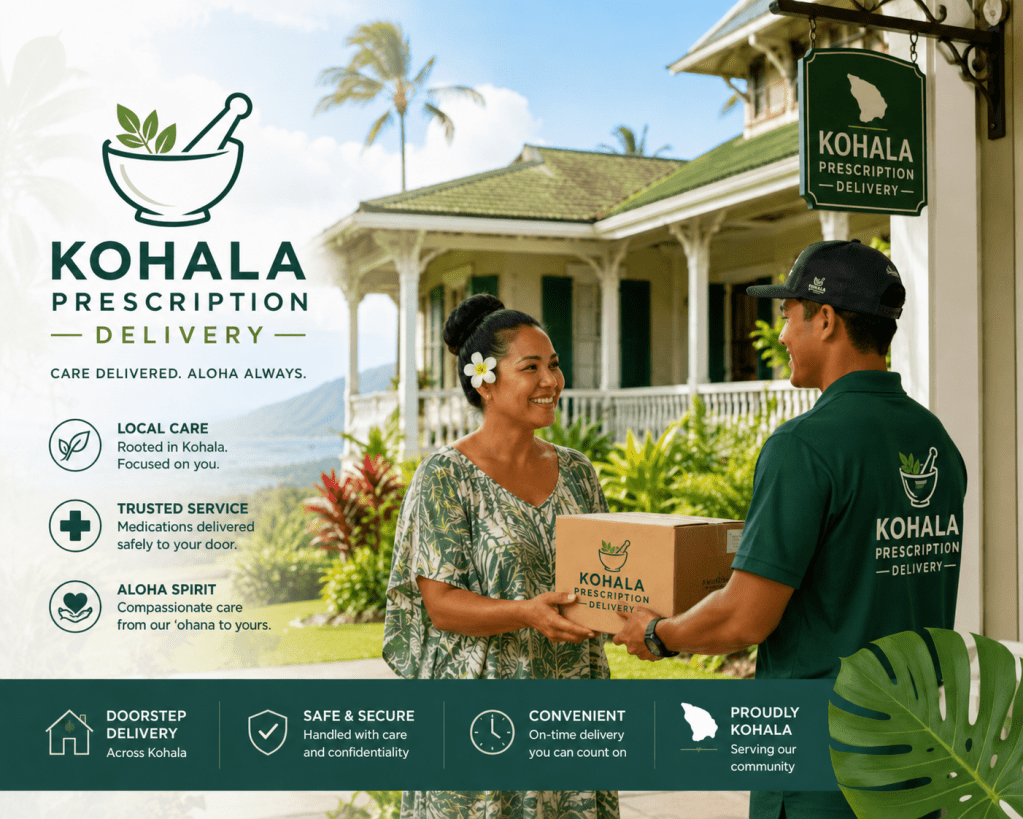

North Kohala has a prescription access problem. A corporate monopoly has swallowed the last tiny rural pharmacy. Regardless of how effective it was, it at least existed.
This new lack of local pharmacy access is not a minor inconvenience. It is a rural health deficiency affecting an aging community, a geographically isolated district, and residents who are increasingly being asked to manage modern medical treatment without adequate transportation, pharmacy access, or delivery infrastructure that treatment requires.
Across the United States, prescription drug use is now a basic feature of life. Roughly half of the total population uses at least one prescription drug in a given month. Among adults, about two-thirds take at least one prescribed medication, and nearly one-third take four or more.
For older adults, prescription use is close to universal. Medications for blood pressure, heart disease, diabetes, thyroid disease, pain, infection, depression, anxiety, sleep disorders, cancer, neurological conditions, and post-surgical recovery are not optional conveniences. They are the means by which people remain stable, functional, and alive.
North Kohala’s need is intensified by its demographic reality. This is an aging rural district. The younger population is leaving or being pushed out by housing costs, limited employment, and the long-term erosion of local opportunity.
What remains is a growing share of kūpuna, retirees, medically fragile residents, disabled residents, and working families already stretched thin. An aging population uses more medication, needs more frequent refills, has more chronic conditions, and is less able to absorb delays, missed doses, or repeated long-distance trips for basic care.
The national numbers, applied locally, make the scale obvious. North Kohala has roughly 7,000 residents spread across a large rural district. If only half of them use prescription drugs, thousands of residents need regular medication access. If adult usage follows national adult patterns, the number is higher.
Many of those residents are not occasional users. They are people managing multiple prescriptions, recurring refills, medication changes, post-hospital instructions, chronic pain, cardiac conditions, diabetes, respiratory illness, cancer treatment, mental health care, or end-of-life care.
This is not a small errand problem. It is a social systems problem.
North Kohala lacks adequate prescription delivery infrastructure for the population it now has. Residents in Hāwī, Kapaʻau, Halaʻula, ʻĀinakea, Niuliʻi, Makapala, Kokoiki, and outlying roads often depend on travel to Waimea or beyond for pharmacy access. For a healthy person with a reliable car, that trip is manageable. For an elderly resident, a disabled person, a post-surgical patient, a caregiver, or someone without dependable transportation, that trip becomes a serious barrier to treatment.
This is where the deficiency becomes dangerous. Medication access fails not only when a doctor does not prescribe. It fails when a patient cannot obtain the medicine. A prescription sitting at a pharmacy counter in Waimea does not treat high blood pressure in Kapaʻau. It does not relieve post-operative pain in Hāwī. It does not stabilize diabetes in Niuliʻi. It does not help a caregiver who cannot leave an elderly spouse alone. It does not help a patient who has stopped driving. It does not help a household choosing between gasoline, food, and medical travel.
The burden is especially severe for scheduled substances. These include medications used for pain, ADHD, anxiety, sleep disorders, seizure disorders, palliative care, and other serious conditions. These medications are tightly regulated, and regulation is necessary. But regulation has created repeated access burdens that fall hardest on rural patients. Schedule II medications generally cannot simply be refilled like ordinary maintenance medications. Many require new prescriptions and strict timing. Supplies are often limited. Pharmacies may be out of stock. Patients may be told to return later, call again, or travel elsewhere.
For an aging rural community, this is not merely inconvenience. It is punitive.
A patient with chronic pain may need medication every month. A patient recovering from surgery may be unable to drive at precisely the moment the medication is needed. A person in palliative care should not have to rely on a neighbor or family member to chase down controlled medication across district lines. A kūpuna managing severe illness should not be forced into repeated pharmacy trips because the law allows control but the system fails to provide access. Regulation without delivery capacity becomes a barrier to care.
North Kohala’s current system relies too heavily on informal workarounds. Family members pick up medications. Neighbors help when they can. Caregivers rearrange schedules. Patients delay pickup. Some skip doses. Some stretch medication. Some simply go without until they can get a ride. These informal systems may reflect community care, but they are not a substitute for healthcare infrastructure. They are evidence that infrastructure is missing.
Mail order is not enough. It works for some maintenance medications, under stable conditions, when prescriptions are predictable, insurance rules are clear, addresses are reliable, and patients are comfortable navigating online or telephone systems. But mail order is poorly suited for urgent prescriptions, medication changes, post-surgical needs, controlled substances with strict refill windows, cold-chain medications, pharmacy shortages, and patients who need direct pharmacist coordination. A rural community cannot rely on mail order alone and call that access.
What North Kohala needs is a lawful, pharmacy-controlled prescription delivery service designed for rural conditions, including a compliant pathway for scheduled substances. This means secure procedures, verified prescriptions, tamper-evident packaging, identity verification where required, chain-of-custody documentation, trained delivery personnel, pharmacist oversight, privacy protections, and clear eligibility rules. It means treating delivery not as a side convenience but as part of the medication system itself.
The strongest argument for scheduled-substance delivery is not that these medications should be easy to obtain. The argument is that legitimate patients should not be harmed by a system that controls medication without providing a realistic way to access it.
Proper delivery can strengthen accountability. It can document who received the medication, when it was delivered, where it went, and under what procedure. In many cases, that is more controlled than the current informal practice of sending relatives, friends, or caregivers to pick up medications under stress.
The deficiency is plain. North Kohala is aging. Younger residents are leaving. Chronic disease is increasing with age. Transportation is limited. Pharmacy access is distant. Prescription use is common. Controlled-substance rules require repeated contact with the pharmacy. Our district simply does not have a robust, dependable, locally appropriate delivery structure for the medications people need.
This is a public health failure.
Healthcare does not end when the prescription is written. In rural communities, that is often where the real barrier begins.
A serious prescription delivery service would reduce missed medications, reduce unnecessary travel, support caregivers, improve medication adherence, and protect vulnerable residents. It would allow kūpuna to remain safely at home longer. It would reduce pressure on families already carrying unpaid care burdens. It would support patients after surgery or hospitalization. It would give clinicians and pharmacists a more reliable way to complete the treatment cycle.
North Kohala should not have to accept a medication access system built for younger, urban, mobile populations. Its population is older, more geographically dispersed, and increasingly vulnerable to the loss of local services. A district that cannot reliably get medicine to its residents has a healthcare access problem, regardless of how many prescriptions are written.
Prescription delivery, including legally compliant delivery of scheduled substances, should be treated as essential rural health infrastructure. Without it, North Kohala’s aging residents will continue to bear the cost of a system that recognizes their medical needs on paper but fails them in practice.
The need is immediate. The current structure is inadequate. North Kohala does not need another workaround.
We need a prescription delivery system built for the community that needs it.
A draft plan for a non-profit service is available for your review, please ask.
If you would like to be part of the solution, please connect.

Leave a Reply