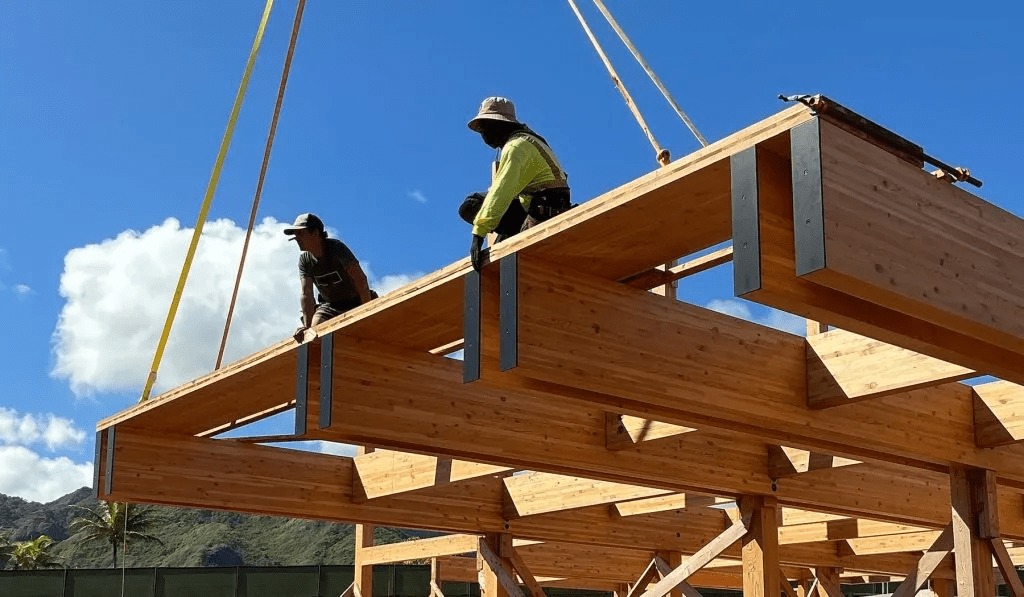
The carpenters union represents thousands of working people in Hawaiʻi, many of them trying to survive in one of the most brutally expensive places on earth. Stable construction jobs, fair wages, and union protections matter. No serious politics should dismiss the material needs of workers or romanticize poverty in the name of environmental or cultural purity.
But a people-centered politics cannot stop at wages. The question is not simply whether construction creates jobs. The deeper question is whether those jobs are tied to a political economy that continues the dispossession of Kānaka Maoli, the commodification of ʻāina, and the transformation of Hawaiʻi into a playground for capital while local families are priced out of their own homeland.
From that perspective, PRP is not merely a labor PAC. It functions as part of a growth coalition: an alliance of construction labor, contractors, developers, and political insiders whose shared priority is keeping the building machine moving. That machine may produce paychecks, but it also produces luxury housing, speculative development, infrastructure debt, displacement, and the continued subordination of ʻāina to exchange value.
This is not an abstract urban-planning problem. Land is not just “real estate.” ʻĀina is ancestor, source of life, and the material basis of Hawaiian sovereignty.
The progressive defense says PRP backs housing and infrastructure. But “more building” is not the same as housing justice. If development is governed by market incentives, donor power, and contractor interests, it will not automatically house kānaka, working-class locals, kūpuna, or families being pushed to the continent. It can just as easily mean more units for investors, more high-end development, and more public subsidy for private gain. A truly progressive housing politics would begin with social housing, Hawaiian homelands, community land trusts, anti-speculation policy, tenant power, and public control over land use—not with whatever keeps contractors busy and profitable.
The rail project exposes the contradiction clearly. PRP and its allies backed rail as a jobs-and-infrastructure project, but the result was years of delay, massive cost overruns, and a burden shifted onto ordinary residents. The union got construction work. Contractors got contracts. Politicians got a development narrative. But the public inherited debt, disruption, and a transit system shaped less by democratic planning than by elite dealmaking. That is not liberation infrastructure. That is machine politics with a progressive vocabulary.
The democratic problem is just as serious. When a super PAC can overwhelm elections, intimidate challengers, and create a chilling effect on legislators, it is not simply “participating in politics.” It is narrowing the field of democratic possibility. Candidates learn which interests they cannot cross. Legislators learn which votes may end their careers. Communities learn that testimony, organizing, and cultural knowledge matter less than money. That is especially dangerous in Hawaiʻi, where Kānaka have already been structurally denied full political power over their own land.
A radically progressive view must also reject the false choice between workers and ʻāina. The answer is not to abandon carpenters, laborers, or construction workers. The answer is to break the political bargain that ties their livelihoods to dispossession. Workers deserve union wages, safe jobs, and long-term security — but those jobs should be directed toward repairing Hawaiʻi rather than accelerating its sale. Build truly affordable housing. Restore ʻāina. Retrofit existing buildings. Repair schools. Strengthen public infrastructure. Build for local need, not speculative profit. Put labor power in service of ea, not empire.
So the honest conclusion is this: PRP may deliver real benefits to a particular sector of Hawaiʻi’s working class, but it does so through a political model that is anti-democratic, pro-growth, and structurally hostile to Kānaka self-determination. Its politics treat construction as an unquestioned good, development as destiny, and ʻāina as a platform for economic activity rather than a living source of sovereignty and responsibility.
This is not acceptable. We must insist that labor justice, housing justice, climate justice, and Hawaiian sovereignty are not separate issues. The measure of progress is not how much gets built. It is whether kānaka can remain in Hawaiʻi, govern Hawaiʻi, protect ʻāina, and live with dignity in their homeland.


Leave a Reply