
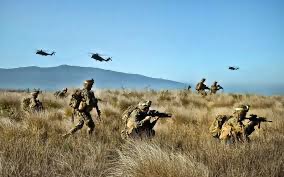
The presence of the U.S. military in Hawaiʻi is often framed as an economic boon—second only to tourism in its contribution to the islands’ gross domestic product. Yet the actual costs of hosting the military—borne by the State of Hawaiʻi and its people—are rarely tallied. These costs include lost revenue from undervalued land leases, the opportunity costs of restricted land use, and the mounting fiscal and environmental burden of military contamination.
Land Lease Revenue
One of the most glaring examples of lost revenue stems from military land leases. In 1964, the State of Hawaiʻi entered into agreements leasing out tens of thousands of acres of land to the U.S. military at the token rate of one dollar for the entire 65-year term¹. These leases covered some of the most expansive tracts of state land, including:
- Pōhakuloa Training Area (Hawaiʻi Island): ~23,000 acres leased to the Army².
- Oʻahu training areas (Mākua, Kahuku, Kawailoa-Poamoho): ~6,300 acres³.
These leases expire in 2029, raising the question of whether the state will continue essentially subsidizing U.S. military activity or renegotiate for market value. Analysts note that if priced fairly, lease revenues could amount to hundreds of millions—if not billions—over future decades⁴.
Land Return vs. Revenue
At times, the military has returned parcels to the state. In 2023, for instance, 363 acres on Molokaʻi were transferred back, earmarked for Native Hawaiian homesteading and agriculture⁵. While symbolically important, these returns generate no revenue, reflecting cultural restitution rather than financial compensation.
Broader Economic Dependency
Official statistics emphasize that defense spending contributes between $7.7 billion and 15 billion annually, comprising about 7–8.5% of Hawaiʻi’s GDP⁶. But these figures measure economic dependency, not fiscal cost. They highlight how Hawaiʻi’s economy has been shaped to depend on defense rather than the opportunity costs of land and water tied up in military use.
Environmental and Social Liabilities
The financial impacts of military presence extend beyond land valuation. The 2021 Red Hill fuel leak, which contaminated Oʻahu’s aquifer, illustrates how the state ultimately absorbs the costs of “national security.” Cleanup, health care, litigation, and lost public trust will amount to billions of dollars over decades⁷. Unexploded ordnance on Kahoʻolawe, PFAS contamination near bases, and restricted shoreline access further underscore hidden costs—none of which appear in economic boosterism about defense spending.
Summary
| Category | Known Facts | What’s Missing / Unknown |
|---|---|---|
| Land Lease Revenue | Leases signed in 1964 at $1 total for tens of thousands of acres¹ | Fair-market lease value, projected state revenue |
| Lease Renegotiations (2029) | Leases expiring; Army seeking renewal²³ | Final terms; potential for billions in state revenue⁴ |
| Returned Lands (Molokaʻi) | 363 acres returned in 2023 for homesteading⁵ | No monetary compensation to the state |
| Economic Dependency | Military generates $7.7–15b annually, ~8% GDP⁶ | Not a measure of fiscal cost; only of dependency |
| Environmental & Social Costs | Red Hill disaster; billions in health and cleanup⁷ | No comprehensive state tally of liabilities or opportunity cost |
As we can see, the costs of hosting the U.S. military in Hawaiʻi are not fully measured in budgets. They are embedded in undervalued leases, foregone land use, poisoned aquifers, and an economy dependent on military spending. As the 2029 lease expirations approach, Hawaiʻi has the opportunity—and the obligation—to ask what these lands are truly worth, and whether the benefits of militarization outweigh the profound costs.
- State of Hawaiʻi, Department of Land and Natural Resources, Military Land Leases Overview, 1964.
- U.S. Army, Final Environmental Impact Statement, Pōhakuloa Training Area, 2022.
- State of Hawaiʻi Land Records, “Oʻahu Military Lease Parcels,” 1964–present.
- Honolulu Civil Beat, “Hawaiʻi Could Earn Billions if Military Leases Priced at Market Value,” 2022.
- Hawaiʻi News Now, “U.S. Returns 363 Acres on Molokaʻi to State,” July 2023.
- Hawaiʻi Department of Business, Economic Development & Tourism, Defense Economy Data Report, 2022.
- Christina Jedra, “Red Hill Fuel Leak and the Cost of Contamination,” Honolulu Civil Beat, 2021.


Leave a comment