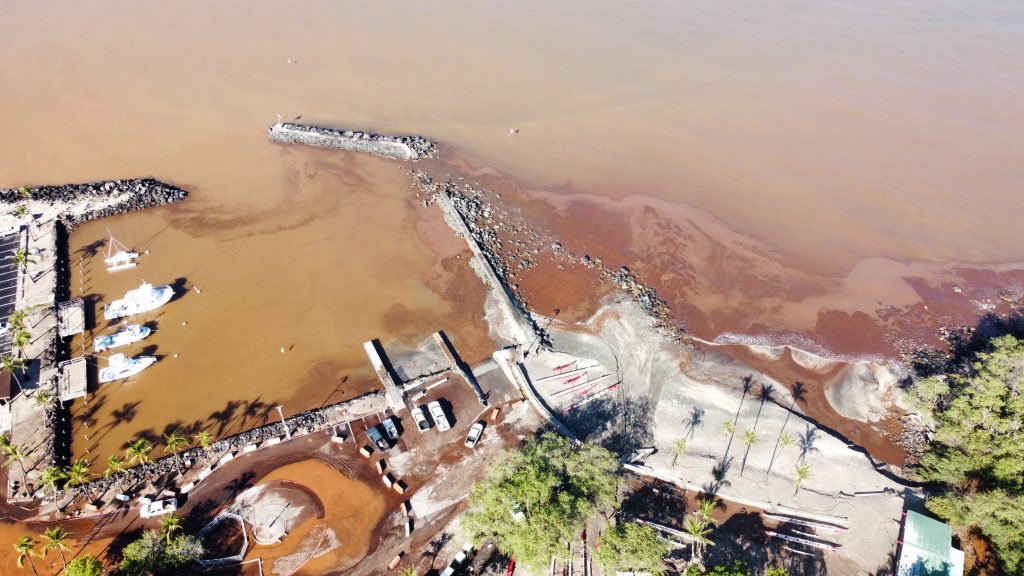
Coral reefs are often thought of as purely marine systems, but their health is intricately tied to freshwater dynamics on land. In Hawaiʻi, the connection between terrestrial water and coastal reef health is especially profound. As aquifers are depleted and streams dry up due to overdevelopment and climate change, the resulting loss of freshwater inputs—particularly submarine groundwater discharge (SGD)—has cascading and sometimes catastrophic effects on coral ecosystems. These impacts include increased thermal stress, pollution, sedimentation, and ultimately, the collapse of biodiversity and fisheries that depend on coral reef structure.
Loss of Submarine Groundwater Discharge (SGD)
In healthy coastal systems, nearshore coral reefs benefit from low-volume, low-nutrient submarine groundwater discharge. This brackish seepage plays a critical role in regulating nearshore salinity, nutrient balance, and water temperature. In Hawaiʻi, many reefs evolved under such conditions. When aquifers are depleted, this freshwater buffer disappears. Without it, reefs face hotter, saltier, and more stagnant waters—conditions that push many coral species beyond their physiological thresholds1.
The reduction in SGD increases the vulnerability of coral organisms that have adapted to relatively stable salinity gradients. Even small changes in salinity can affect coral metabolism, reproduction, and calcification. This stress, when compounded with rising sea surface temperatures, leads to bleaching and mortality.
Altered Nutrient Flows and Pollution Concentration
As groundwater and stream flow diminish, another effect takes hold: nutrient concentrations increase in coastal waters. During storm events, particularly in the absence of consistent baseflow, overland runoff delivers intense pulses of nitrogen, phosphorus, and contaminants from cesspools, fertilizers, and impervious surfaces. Without freshwater to dilute and flush these materials, localized eutrophication results.
This nutrient-rich environment fosters harmful algal blooms that smother coral, block light, and disrupt oxygen levels in the reef zone. Furthermore, septic leakage and cesspool discharge become concentrated in shrinking discharge zones, poisoning reef species and contributing to the rise in coral diseases2.
Sediment Overload and Loss of Water Clarity
Freshwater loss also impacts sediment transport. In healthy systems, continuous baseflow stabilizes watersheds and allows sediments to be moved downstream at sustainable rates. But when this flow is disrupted, sediment builds up on land and is released all at once during storms. This sediment then floods coastal waters, reducing clarity and light penetration.
Corals depend on sunlight to support the photosynthesis of their symbiotic algae (zooxanthellae), which supply them with energy. Chronic turbidity from sedimentation interferes with this relationship, causing bleaching and death. It also favors opportunistic species like cyanobacteria and invasive algae that outcompete coral for space and light3.
Thermal Stress and the Loss of Natural Cooling
Groundwater seepage does more than provide freshwater—it also helps moderate coastal temperatures. Cool groundwater inputs can create localized “thermal refuges” that protect corals during marine heatwaves. With this natural buffer gone, reefs are left fully exposed to rising sea surface temperatures, a trend already responsible for repeated coral bleaching events in Hawaiʻi and globally.
Combined with global warming, the absence of these cooling seeps accelerates the onset and severity of bleaching. In recent years, widespread bleaching events in Hawaiʻi have coincided with diminished freshwater availability, underscoring this compounding threat4.
Ecosystem Collapse and Biodiversity Decline
The cumulative result of these impacts is an unraveling of reef ecosystems. Coral reefs depend on a delicate equilibrium of salinity, temperature, and nutrient balance. Even minor disruptions in freshwater input can tip this balance toward collapse. The consequences are dire: reduced coral recruitment, die-offs of reef-dependent fish and invertebrates, and the structural breakdown of reef systems that protect coastlines from erosion and support subsistence fisheries.
As corals disappear, so too do the species that rely on them. In Hawaiʻi, this means not only ecological loss but cultural disruption, as many Native Hawaiian practices—such as subsistence fishing, limu gathering, and reef-based ceremonies—depend on thriving marine ecosystems.
Footnotes
- Dulai, Henrietta, et al. “Groundwater Discharge and Nutrient Loading to Hawaiian Reefs.” Environmental Science & Technology, vol. 50, no. 12, 2016, pp. 6547–6556.
- Whittier, R., and Aly El-Kadi. “Human and Natural Impacts on Groundwater Quality of Hawaiʻi.” Water Research Center, University of Hawaiʻi at Mānoa, 2014.
- Fabricius, Katharina E. “Effects of Terrestrial Runoff on the Ecology of Corals and Coral Reefs: Review and Synthesis.” Marine Pollution Bulletin, vol. 50, no. 2, 2005, pp. 125–146.
- Bahr, Keisha D., Paul L. Jokiel, and Robert J. Toonen. “The Impact of Groundwater Discharge and Submarine Seeps on Coral Reef Health.” Scientific Reports, vol. 5, 2015, article no. 12438.
Summary
| Impact | Result on Coral Reefs |
|---|---|
| Aquifer depletion | Hotter, saltier nearshore waters |
| Loss of baseflow | Reduced flushing → increased nutrient and pollutant loading |
| Storm-driven runoff | Sediment overload → smothered reefs |
| Cesspool pollution | Algal overgrowth, coral disease |
| Loss of thermal refuges | Increased coral bleaching |
| Reduced salinity buffering | Ecosystem instability, biodiversity collapse |


Leave a comment