
In the history of political upheaval, few figures loom as large—or as contested—as Mao Zedong. He led a revolution that overthrew a centuries-old feudal order, unified a fractured country, and remade its cultural, economic, and political systems from the ground up. His legacy is drenched in contradiction: visionary and tyrant, liberator and butcher. But love him or hate him, Mao was a strategist. He understood power—how to seize it, shape it, and hold it.
Donald Trump is something else entirely: the conman-as-candidate, the marketer-as-messiah. He didn’t lead a revolution so much as hijack a decaying system with the instincts of a late-night infomercial salesman. His “movement” is fueled not by theory or long-term vision but by grievance, spectacle, and meme-ready rage. He offers no blueprint—just branding.
What follows is not a moral comparison. Mao’s revolutions led to mass death, purges, and trauma still rippling through China. Trump’s lies helped incite a failed coup. Both damaged their nations in devastating ways. But from a purely political lens—one focused on strategy, organization, and transformational intent—the contrast is instructive.
Movement-Building vs. Brand-Building
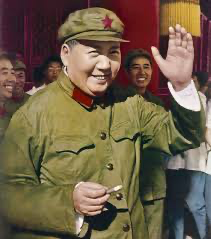
Mao’s strength was his ability to build a mass movement from China’s most dispossessed classes: the rural peasantry. He understood that real power didn’t reside in the cities, or in elite circles—it lived among the people nobody was paying attention to. His strategy of protracted people’s war, encircling the cities from the countryside, was based on years of groundwork, trust-building, and ideological training.
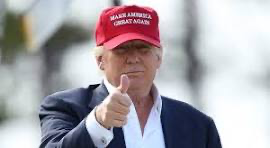
Trump’s base, by contrast, was not truly abandoned—but rather disoriented. White, middle-class Americans who felt their grip slipping on cultural and economic dominance were ripe for scapegoating and nostalgia. Trump didn’t organize them—he amplified them, surfacing resentments already boiling. His genius wasn’t in building power from below but in branding rage as revolution.
Cultural Revolution vs. Culture War
Mao’s Cultural Revolution was a terrifying attempt to remake the national psyche—to destroy “old ideas, old customs, old habits, and old culture.” It was brutal, ideological, and chaotic, but it was also an explicit recognition that culture was a battleground.
Trump’s “culture war” is shallow by comparison. His targets are immigrants, trans kids, critical race theory, and any sign of modernity that threatens the old hierarchies. There is no coherent vision behind it, just a desire to provoke and polarize. It’s not revolution—it’s ratings.
Mass Line vs. Echo Chamber
Mao’s “mass line” approach demanded listening to the people, synthesizing their concerns, and returning those ideas as a political program. Even when manipulated, this was a form of collective engagement and ideological discipline.
Trump’s movement thrives on echo chambers—closed information loops where Fox News headlines become gospel and memes outweigh manifestos. There is no collective vision, only the immediate gratification of outrage.
Long-Term Vision vs. Instant Gratification
Mao thought in terms of decades. He believed in history’s arc and in playing the long game. Trump can barely stay on script for 15 minutes. His political project is about now: the next news cycle, the next indictment, the next merch drop. He doesn’t wield time—he chases it.
Revolutionary Structure vs. Grift Machinery
Mao built parallel institutions—party structures, rural soviets, people’s communes—that displaced the old state. Trump took over the Republican Party and bent it to his will, not through discipline but through fear and inertia. His “movement” sells NFTs, snake oil supplements, and outrage-based subscriptions. It’s not a revolution—it’s a grift.
Mao Built. Trump Distracts.
If Mao was a ruthless revolutionary architect, Trump is a demolition man with a Twitter account. Mao had a theory of power, a strategy for change, and a willingness to reshape the world—no matter the cost. Trump has slogans, scapegoats, and a brand. The only thing he builds is resentment.
Both are dangerous. But one understood the mechanics of transformation. The other sells hats.

Leave a comment