
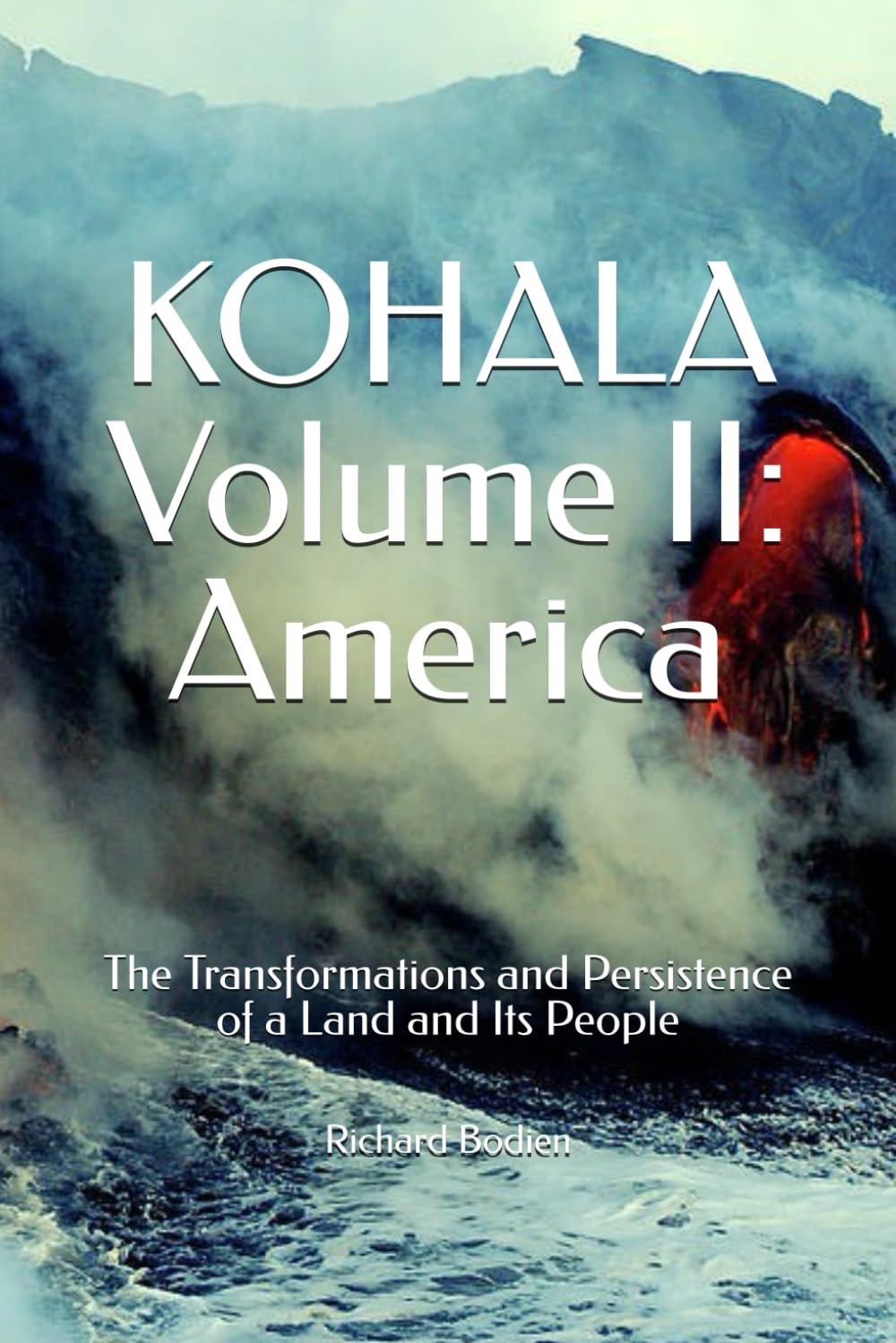
The Transformations and Persistence of a Land and Its People
History is usually recorded by those in power, presenting narratives that obscure more than they reveal. As a tool of power, the stories most often told are those that justify colonization, erase violence, and legitimize the robbery of land and destruction of culture.
In Kohala, the United States and its collaborators wrote versions of the past that concealed the theft, displacement, and systematic erasure of Native Hawaiian people and traditions. Only recently have inspiring Hawaiian scholars such as Jonathon Osorio and Noenoe Silva begun to reclaim the truth: the story of how this place was stolen, piece by piece, and rebuilt into a machine for someone else’s profit.
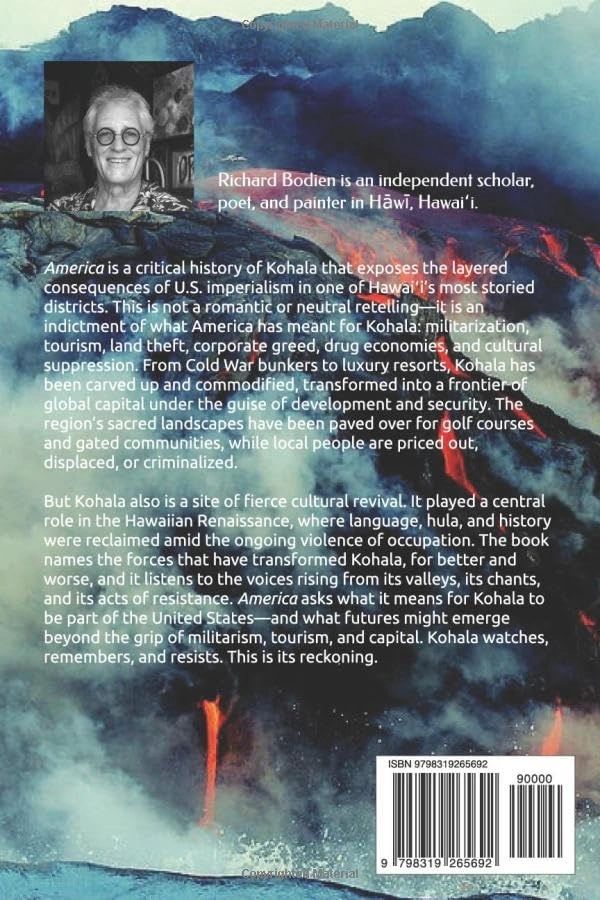
This book is not neutral. It is an indictment of American conquest in Kohala, and a call to confront its consequences. America did not just govern Hawai‘i—it imposed a system designed to extract and dominate. Missionaries arrived to convert, businessmen to seize land and labor, and the military to secure territory by force. Every era brought new tools of control: the sugar barons seized communal lands, imprisoned families in wage labor, and divided communities with imported workers; then the military carved bunkers into sacred sites and sealed coastlines behind barbed wire; then tourism and real estate replaced fishing villages with resorts, ancestral gathering grounds with golf courses, and multi-generational family homes with multi-million-dollar mansions.
These are not accidents or isolated misfortunes. They are the result of policies—the Māhele, annexation, corporate land grabs, and zoning laws—engineered for the benefit of U.S. corporate and military interests. The result: local families forced out, poverty engineered by design, addiction and incarceration as the predictable if not pre-meditated fallout of community collapse.
Of course, Kohala’s land was not merely “transformed.” It was taken. Native families were removed and replaced. Subsistence living was made impossible. Militarization fortified the theft, and tourism sold the ruins and the pain as entertainment for outsiders. Each new wave of development claimed to bring progress, but only deepened the wounds and drove the community further from its origins.
And yet—Kohala endures. Hawaiian knowledge and connection to place survive, not because of the system, but in spite of it. Resistance is found in every chant, every family that refuses to leave, every effort to restore food sovereignty, water rights, and cultural autonomy. These are acts of survival and defiance.
Volumes I and II of this book together document the transitions, consequences, and responses by Kohala—and by extension, Hawaiʻi—to the arrival of military adventurers, missionaries, traders, and occupiers.
Volume I takes this cultural history from the first migrations through the death of Kamehameha and the abolition of kapu by his queens:
The First Unsettling (1778–1819)
- 1778: Captain Cook arrives
- 1793: George Vancouver returns with cattle and guns
- Early epidemics, trade, firearms, alcohol, and foreign belief systems destabilize aliʻi control and kapu systems
- Missionary pressure: ideological colonization precedes military or political conquest
- Kamehameha maintains unity through force and diplomacy—but the order is fragile
- Death of Kamehameha
Volume II discusses the great upheavals after the death of Kamehameha through the the many transitions that have brought us to the dilemmas that Kohala faces today:
Part I: Huli (overturning) documents the violent overthrow of Hawaiian governance and the imposition of foreign rule and values. The kingdom falls not in one blow, but in a series of planned, layered disruptions—legal, spiritual, and economic.
- 1819: Abolition of the kapu system marks spiritual rupture from within
- 1820: Arrival of missionaries accelerates institutional transformation — schooling, religion, property
- 1848: The Great Māhele destroys communal land tenure
- Rise of a haole capitalist class: sugar plantations, intermarried missionary families, growing U.S. economic influence
- 1893: Overthrow of Queen Liliʻuokalani by Committee of Safety and U.S. Marines
Part II: Hewa (wrongdoing, imbalance) describes the devastation wrought by disease, corporate land theft, plantation monoculture, and the use of law as a weapon to exclude and dispossess. This is not just history—it is ongoing harm, sustained and justified by the same forces today. But devastation is not the final word. Hewa is not just a mistake—it is a system. A structure of harm that masks itself as modernization.
- 1898: U.S. annexation formalizes occupation; no treaty of cession
- Epidemics like measles (1848) and smallpox (1853) depopulate Hawaiians by over 80% by the early 20th century
- Loss of kuleana lands, military seizure of coastline, and sugar monoculture devastate Kohala’s ecosystems
- Institutionalization of American governance, law, language, and history — erasing Indigenous knowledge
- Tourism, development, military bases, and settler real estate speculation displace Native Hawaiians from ancestral lands
Part III: Hoʻoponopono (to make things right, balance) names the wrongs that have been committed and reveals the wounds so they may be treated and healed.
- The Hawaiian Renaissance reclaims hula, ʻōlelo Hawaiʻi, mele, and resistance politics
- Families revive hoʻoponopono practices within households, communities, and justice systems
- Legal challenges, land back movements, and sovereignty activism restore visibility and voice
- Public reckoning: 1993 U.S. Apology Resolution acknowledges overthrow but offers no restitution
- Cultural resurgence becomes a political act
- Aloha becomes resistance: “Aloha is not submission. Aloha is resistance.”—Haunani-Kay Trask
Part III: Hoʻōla (healing) insists that survival is not enough. Kohala’s future depends on memory, justice, and restoration for the reclamation of land, autonomy, and dignity. There are solutions. Hoʻōla is not a return—it is a rooted becoming. Healing is the future remembering itself.
- Replanting of loʻi and reactivation of loko iʻa
- Language immersion, land stewardship, and education grounded in ʻāina-based practices
- Reconnection to moʻokūʻauhau (genealogy) and restoration of burial grounds, heiau, and sacred sites
- Resilience movements build food sovereignty, climate justice, and cultural continuity
- Healing is not passive—it is a generational labor of love, memory, and resistance: “Aloha is the foundation of our culture.Although that word is overused, it has deep meaning and significance. Living aloha is healing…We probably have more healers per square foot than any other place on Earth. Our island is a place of healing, and our people, malihini [newcomers] and locals alike, are magical.”—Hank Fergerstrom
Through all of this, Kohala is not a passive victim. It is a site of ongoing contest, memory, and resistance. The stories, testimonies, chants, and silences here all demand to be heard—not as artifacts, but as urgent calls for justice and change.
Only by confronting the reality of history—without filters, without apology—can we begin to rebuild. Justice is not abstract; it means restoration of land and community, and returning power to those from whom it was stolen.
I know that our current political economy stands in the way, and must itself be overturned and transformed to meet the needs of the ʻāina and its people. The solutions are known and waiting to be implemented. Do we have the will to collectively act on them?
This is Kohala’s story and its unfinished fight in America’s shadow as it is still unfolding.
This book is available on Amazon: https://a.co/d/dBRmUD6

Leave a comment