By Someone Who Can No longer Afford to Live Here
Let us be reasonable. the people of Hawaiʻi Island—the Big Island, Moku o Keawe, land of lava and legend—are flat broke. Not in spirit, mind you. But in dollars, in housing, in basic groceries that don’t require a second mortgage, Hawaiʻi is bleeding out. The politicians have tried everything short of actual solutions: luxury rezoning, airport expansion, “resilience” task forces, and the occasional coconut festival.
So here it is: sell the naming rights to Hawaiʻi Island.
No, not the land itself—we know better than to repeat that mistake (see: the Māhele, the overthrow, every real estate transaction since 1893). Just the name. Names, after all, are symbolic. And symbols, in the modern age, are very, very lucrative.
Think of it like a stadium. If the Lakers can play in the Crypto.com Arena, surely we can live on Costco Island, where the poi comes in bulk and the sunscreen flows like rain. Or Meta Moku, where you can pretend to farm kalo in VR while your real garden dies of drought and red tape.
The Bidding War of the Century
We livestream the auction worldwide.
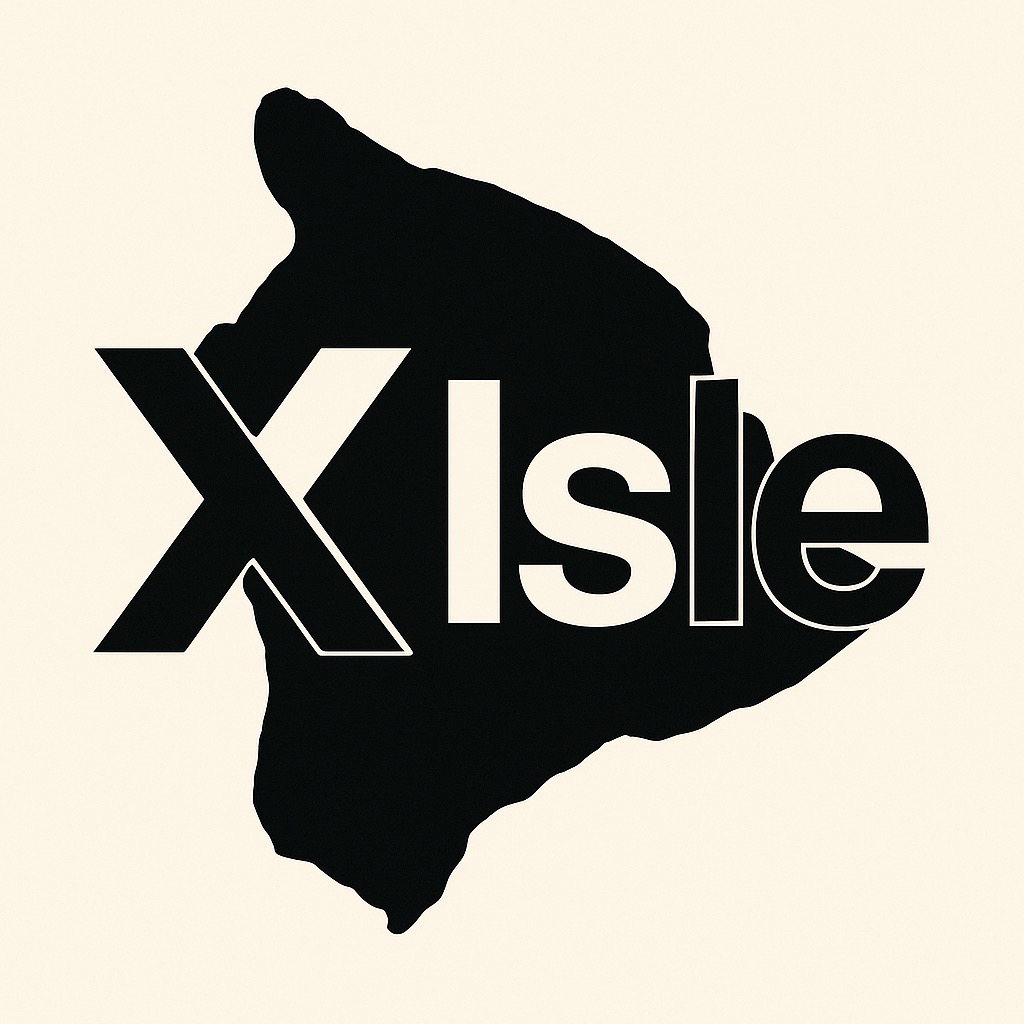
Elon bids first: X Isle: “Powering the planet from Pele’s heart.”
Zuckerberg offers Zucktopia—a land where all citizens are fitted with neural interfaces and asked to click “Like” before speaking aloud.
Amazon offers Prime Island with free two-day delivery for approved mainlanders.
Apple floats iHawaiʻi with proprietary lava: “A land of innovation and lava.”
Jeff Bezos offers a launchpad for new civilizations: Blue Origin Island
And of course Benioff has to get in on the act with Salesforce One: “A cloud island for the future of humanity.”
Even Las Vegas gets in the game, proposing Aloha Mirage as a “culturally-themed entertainment colony.” They promise a climate-controlled Mauna Kea with holographic heiau. “No sacred sites were harmed in the simulation.”
The Fine Print
To maintain dignity, we add a cultural clause: 100% of all proceeds must go toward keeping actual human beings alive in Hawaiʻi. This includes:
- Subsidized housing for residents who don’t own multiple LLCs
- Food assistance for families who can’t afford kale flown in from California
- Legal funds to stop further desecration of ʻāina by billionaires in white linen shirts
We also require the new name to be printed beneath the original: “Hawaiʻi Island (Sponsored by Chevron).”
Because nothing says clean energy like the company that helped melt the ice caps.
The Rebranding Phase
Soon, the island is transformed:
- Waikōloa becomes Walmartlōa
- Kona Coffee is rebranded as Starbucks Select Lava Roast™
- Hilo adopts a new slogan: “Hilo—We Still Have Locals (Some Restrictions Apply)”
Tourists arrive in droves, not to learn, but to consume. The brochures read:
Come visit Volcanoes National Theme Park on Pfizer Island—where every eruption is brought to you by science!
Resistance Emerges
Of course, there is backlash. Kupuna chain themselves to signs reading “MOKU O KEAWE IS NOT A COMMODITY.” Hālau refuse to perform for cruise ship rebrandings.
One rogue group attempts to replace all new signs with hand-carved wooden ones that simply read: “Hāloa Lives.”
And somewhere in the ashes of a luxury subdivision gone bankrupt, children plant real kalo, not the sponsored kind.
Conclusion: Late-Stage Aloha
Critics will ask, “Isn’t this blasphemy? Isn’t this the final desecration of the Hawaiian spirit?”
To which we reply: Only if we believe names are more sacred than the living people who carry them.
Look how we commodified “aloha.” We can do it with “Hawaiʻi” too.
So until the legislature gets the courage to tax the rich, until the tourists stop arriving with more money than sense, and until food sovereignty and land back become more than hashtags—let us sell the name. Let us monetize the myth.
Because clearly, the only language empire understands is branding.
And maybe, just maybe, we can turn that language into food, homes, and hope.
Mahalo for your bid. The auction closes at sunset.

Leave a comment